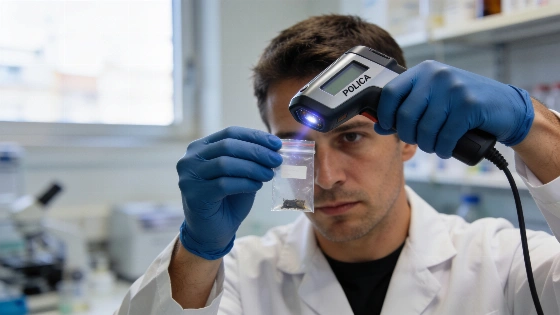
The Mossos d'Esquadra will deploy 14 portable infrared devices to identify drugs and measure purity in seconds. The move aims to ease forensic lab backlogs and accelerate investigations across Catalonia.
The Mossos d'Esquadra are set to overhaul their forensic drug analysis by introducing 14 portable Near Infra Red (NIR) scanners capable of identifying substances and determining purity in as little as five seconds. This investment, valued at €177,800, is designed to relieve the mounting pressure on the police's forensic chemistry units, where drug-related analyses currently account for nearly all laboratory workload.
According to procurement documents, the new NIR readers will be distributed across both central and regional units of the Scientific Police Division. The devices, which incorporate artificial intelligence software, were tested in a pilot project at the Mossos' central headquarters earlier this year. The pilot confirmed their ability to detect THC in marijuana, as well as cocaine and heroin, with processing times between 0.1 and 5 seconds—far outpacing traditional laboratory methods.
Currently, the backlog in drug sample analysis has led to delays in processing other types of forensic evidence, such as those from fires, homicides, shootings, or sexual assault cases. The central drug storage facility in Nou Barris, Barcelona, has become saturated, largely due to slow marijuana testing. The new technology is expected to help clear these bottlenecks and allow forensic teams to redirect resources to other urgent investigations.
The contract for the 14 devices was signed with Target Tecnología on August 19, with a 90-day delivery window. The Mossos have not yet disclosed when the new equipment will be operational or how it will reshape laboratory workflows. The move follows a broader push for technological upgrades within the Scientific Police Division, including the recent outsourcing of 4,000 DNA sample analyses and the purchase of advanced DNA extraction and quantification machinery.
In parallel, the Mossos have modernized their ballistics unit, adding a laser environment reader, a high-speed camera, and equipment to determine shooting distances. The Evofinder system, now in use, enables automatic bullet identification and links between cases involving firearms—a response to the rising use of guns in Catalonia. This trend in technological adoption echoes broader efforts in Spain to integrate AI and sensor-based tools in public safety, as seen in Madrid's deployment of wildlife monitoring sensors, detailed in recent coverage of Madrid's AI-powered urban wildlife tracking.
Forensic science in Spain has faced increasing demands in recent years, with drug seizures and violent crime investigations stretching laboratory capacity. The Mossos' investment in rapid drug analysis technology reflects a shift toward automation and digital tools to maintain efficiency and accuracy. As law enforcement agencies across Europe adopt similar solutions, the Catalan police's experience may serve as a model for other regions seeking to modernize forensic operations and reduce investigative delays.