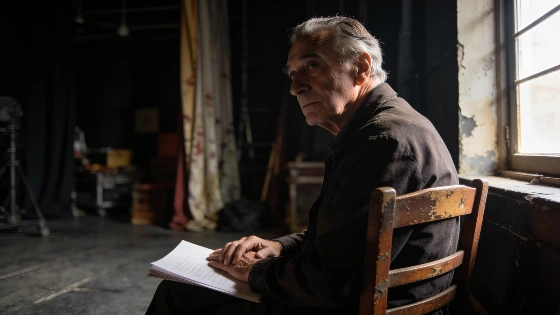
Manel Dueso, a defining figure in Catalan theatre and poetry, has died at 73 in Barcelona. His career spanned acting, directing, and writing. His legacy challenges the boundaries of Spanish performing arts.
Barcelona’s arts scene is mourning the loss of Manel Dueso, whose presence on stage and in poetry circles was impossible to ignore. Dueso died at 73 after a long struggle with colon cancer, leaving behind a body of work that resists easy labels. His blend of raw emotion and sharp intellect made him a singular figure in Catalan culture.
Spanish media outlets including ARA and RTVE report that Dueso died in Barcelona on Tuesday, 9 September 2026, after a lengthy illness. El Nacional notes that his death took place at the Hospital de Sant Pau, underscoring the impact of his passing on Catalonia’s cultural life.
RTVE notes that Dueso's final poetry collection was titled 'Som cavalls d’escuma en camps de menta'.
Dueso was known for his commanding stage presence and a voice that could move from biting irony to deep vulnerability. He never settled into a single role, moving between acting, directing, and writing, though he always said poetry was his real home. His hands and features were as memorable as his performances—distinctive and unmistakably human.
Audiences remember him as Agustín Solano in Ñaque o de piojos, and for roles in TV3 series like Nissaga de poder, La Riera, and Laberint d’ombres. As a director, he tackled everything from Shakespeare and Molière to Genet and Connor MacPherson. His own plays—Sara y Simon, Matem els homes, Pensem. (Pausa.) A la merda!—often pushed both actors and audiences. He drew inspiration from Beckett, Ionesco, and Edward Bond, but his voice was always his own.
His film work included Salvador, Eva, and Operación Malaya. He also directed actors for Manel Huerga and played Torquemada in Isabel. Those who worked with Dueso, whether at the Institut del Teatre or in rehearsal rooms, describe a man whose gruffness hid a deep well of empathy and pain. Conversations with him could linger, as if some of his experience stayed with you.
The announcement of Dueso's death was first made public by the Lapislàtzuli publishing house, which had released several of his works. Multiple major outlets, including ARA, RTVE, and El Nacional, quickly confirmed the news, underscoring his status as a leading actor, director, playwright, and poet in Catalonia.
Personal tragedy shaped much of Dueso’s outlook. His father’s suicide—a man from rural Aragón who struggled to care for a tetraplegic son—haunted him and became a recurring theme in his writing. Dueso’s play Mata’m, published in 2023, explores despair and friendship, and was released alongside a collection of poems, Assaig de petits comiats. These works show his ongoing effort to understand mortality and loss.
Even as illness and a serious fall limited him, Dueso kept working. The Teatre Nacional de Catalunya staged his black comedy Jambo Bwana in its Sala Petita, showing his continued relevance. He often voiced frustration with what he saw as the conservatism of contemporary theatre, insisting that art should provoke and unsettle. He admired poets like Antonina Canyelles, Rimbaud, Baudelaire, and Gil de Biedma, and wanted to work with people driven by real passion.
In his final months, Dueso’s clarity and courage did not fade. He saw language as a weapon against suffering and believed poetry should stay with us to the end. His last published works, and the memories shared by colleagues such as Francesc Orella and Àurea Màrquez, ensure his influence will remain in Catalan culture.
Dueso’s death comes at a time when Catalonia has lost several major cultural figures, as reported earlier. His refusal to conform, his willingness to face pain directly, and his belief in the power of art set a standard few can match. His absence will be felt not just in theatres and poetry readings, but in the ongoing conversation about what it means to create without compromise. The challenge he leaves is clear: risk discomfort, embrace contradiction, and keep the language of the stage alive.