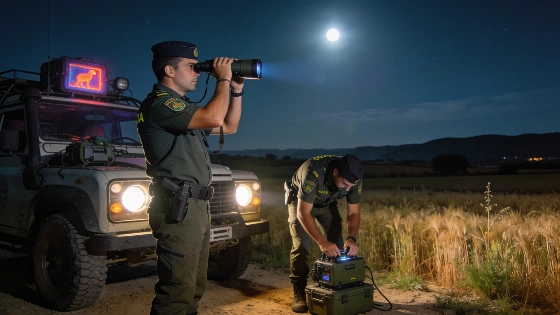
Catalonia has reduced rabbit numbers in Lleida by 68% in one year. Nighttime hunts with thermal imaging and off-road vehicles targeted high-density areas. The region remains on alert as authorities continue intensive measures.
Catalonia has sharply reduced the rabbit population in the Verdú area of Lleida, following a series of intensive night hunts using off-road vehicles and thermal imaging equipment. The regional government, led by Salvador Illa, launched the operation after rabbit densities reached 30.8 animals per square kilometre in June, threatening local crops and prompting urgent calls from agricultural groups.
Between late July and mid-August, 48 coordinated interventions were carried out, resulting in the capture of 7,908 rabbits. The most effective actions involved 26 night patrols with thermal scopes, which alone accounted for 6,311 captures. Additional night surveillance sessions contributed 923 more, while local hunters removed 674 rabbits in just four outings. These efforts brought the average density down to 9.9 rabbits per square kilometre—a 68% reduction in just one year.
Despite this progress, the region remains under alert, as post-reproduction densities still range from 10 to 15 rabbits per square kilometre in some areas. The Department of Agriculture confirmed that high-intensity control measures will continue, especially in the most affected zones. Farmers are encouraged to report crop damage through a dedicated app, triggering rapid intervention by government hunting teams.
During a meeting in Lleida, Jaume Feixa, director of the Territorial Services of Agriculture, assured farming groups that the Generalitat will maintain these aggressive controls to protect harvests. He described the plan as a direct response to the department’s commitment to tackling the overabundance of rabbits, which has become a significant issue for Catalan agriculture.
The use of advanced technology and coordinated night operations marks a shift in how wildlife management is handled in the region. Similar approaches have been adopted elsewhere in Spain, such as Madrid’s deployment of AI-powered sensors to monitor urban wildlife, as detailed in a recent report on Madrid’s real-time bird and bat tracking system. These initiatives reflect a broader trend toward data-driven and targeted interventions in managing animal populations and protecting agricultural interests.
Rabbits have long posed challenges for Spanish farmers, particularly in areas with intensive agriculture. Their rapid reproduction and adaptability make them difficult to control through traditional hunting alone. The current measures in Lleida demonstrate the scale of resources now being deployed to address the problem, with authorities balancing the need to protect crops against the ecological role of native species. The ongoing vigilance and use of technology suggest that Catalonia is likely to maintain a proactive stance as the situation evolves.