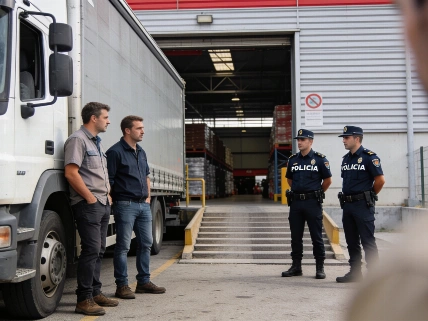
Catalonia is preparing for an unprecedented influx of visitors on August 12, when a rare total solar eclipse will be visible in the region for the first time in more than a century. Up to 50,000 people are expected to travel to the south and west of Catalonia. The Generalitat’s security and logistics operation will involve 700 Mossos d'Esquadra officers, alongside reinforced emergency services.
Authorities have designated 23 official observation points across 18 municipalities, chosen for their capacity, accessibility and safety. The sites were selected to provide more than a minute of totality while avoiding areas exposed to chemical hazards or flooding. Another 60 municipalities have established viewing areas, but the official points are the ones designated to meet the operation’s safety and logistical criteria.
To manage crowds and reduce the risk of simultaneous departures after the eclipse, local administrations are organizing activities at observation sites, including concerts and chances to watch the Perseids meteor shower. The Servei Català de Trànsit has raised concerns about congestion on the AP-7, a motorway prone to summer traffic jams, particularly near the Ebro area. Drivers are urged to consider alternative routes such as the A-2, C-25 or AP-2 and avoid unnecessary car journeys. Dynamic patrols will monitor the AP-7 and stop vehicles from pulling over to view the eclipse. Truck restrictions are scheduled from 14:00 to 24:00, with the affected road segments to be specified.
The Mossos d'Esquadra’s three-phase security plan will begin with pre-alert checks from August 8 to 11, followed by maximum alert on eclipse day and a post-event phase focused on safe departures. The operation will bring together uniformed and plainclothes officers, environmental and traffic units, riot police, drones, helicopters and aquatic teams. Civil Protection plans to activate existing emergency arrangements focused on fire and storm risks, issuing alerts as needed. Staffing on the 112 emergency line is expected to rise by 15% to handle an anticipated increase in calls, from the usual 40 to 45 operators to 59.
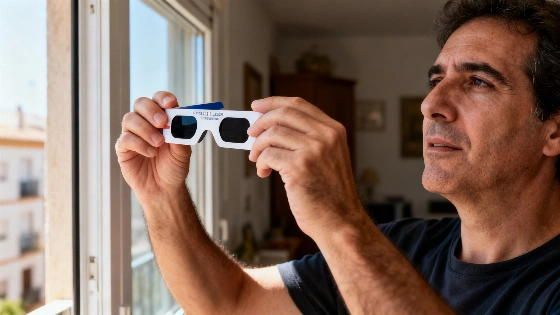
Health authorities warn that looking directly at the sun can cause irreversible eye damage. Eclipse glasses compliant with ISO 12312-2 are recommended for direct viewing, and 150,000 pairs are due to be distributed free at official sites. Improvised filters, including X-rays and photo negatives, are not safe substitutes. Officials also strongly discourage looking at the sun through cameras or binoculars without appropriate solar filters. Indirect methods, such as projecting the sun’s image onto a surface, offer an alternative. Visitors are also advised to use sun protection, stay hydrated and guard against insect bites during extended periods outdoors.
The eclipse is also an chance to engage the public with science. The Department of Research has launched the “Cataluña mira al cielo” campaign, with educational activities planned in schools, prisons and summer camps, as well as information available through a dedicated website. Municipalities are adding their own programmes to introduce the public to eclipse science and the wider study of the sky.
Total solar eclipses are rare in Spain. The last total eclipse visible from Catalonia occurred in 1905, and another event of comparable scale is not expected for about 150 years. The expected summer crowds and the eclipse’s rarity have prompted extensive coordination among police, emergency services and local authorities. The operation is designed to protect visitors and residents while limiting disruption.