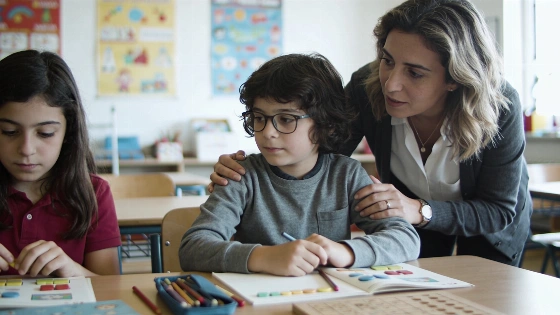
Catalonia’s education chief calls for more special education places. Hundreds of families cannot access specialized support. The region is debating whether to expand existing schools or invest in inclusive classrooms.
Families across Catalonia are struggling to find places for their children in special education schools as demand continues to outstrip supply. Even after 204 new places were added this year, nearly a thousand requests remain unanswered. The shortage has renewed debate over how best to support students who need tailored educational help.
Esther Niubó, Catalonia’s Consellera de Educación y Formación Profesional, has acknowledged the problem. In a recent interview on 3Cat, she said expanding special education is necessary to meet the needs of vulnerable students and ease pressure on mainstream classrooms. Many parents want their children in specialized centers, but limited places make that impossible for some.
Information from data published on September 6, 2026, 40.6% of all Catalan students, or 314,000 children, now require some form of specific educational support, more than double the figure from five years ago.
RAC1
This year, the government invested 6.3 million euros to create 80 new groups, but demand still exceeds the system’s capacity. Some children with special needs remain in regular schools, where families say support is lacking. The region now faces a choice: build more special schools or strengthen inclusive education by adding specialized staff to ordinary classrooms.
Niubó noted that a decade of focusing on inclusion and equal chance has not always produced better outcomes for every child. She called for a new agreement among policymakers, urging them to listen to families and reconsider the balance between integration and specialized support. The basic question is whether to expand special schools or invest further in inclusive models for students with milder needs.
The issue has grown more urgent after recent national setbacks. The latest PISA 2025 results from the OECD showed Spain’s worst performance on record. Catalonia’s own results were excluded because of a sampling error, which Niubó admitted damaged the department’s credibility and led to disciplinary action against several officials. The episode has drawn more attention to the region’s education policies.
To meet growing needs, Catalan authorities have added 1,800 new specialists this year, with about 1,000 dedicated specifically to supporting students with special needs. Inclusive resources have increased by 36%, but the rate at which new support needs are identified has risen by 28%, leaving the system struggling to keep pace with demand.
El Periódico
The new school year has also begun with teacher strikes in eleven Catalan districts. The Assemblea Educativa de Catalunya, which includes union representatives, is expected to set out its demands on September 19. Niubó acknowledged the difficult period facing the education department but said the government is committed to building a system that can meet future needs.
Other recent events have added to the pressure. As reported earlier, Barcelona has faced record-breaking heat, making the start of the school year more complicated for students and staff.
The shortage of special education places has exposed a major gap in Catalonia’s support for its most vulnerable students. The government has made some investments, yet the mismatch between policy and reality means many families are still waiting. Catalonia’s leaders now face a clear decision: significantly expand specialized support or risk leaving hundreds of children without the help they need.