Catalonia has opened its biggest solar park in Alcarràs, adding 300 megawatts to the grid. The project, backed by the regional government, has sparked debate among local councils and social groups. Another 100 megawatts will be added soon.
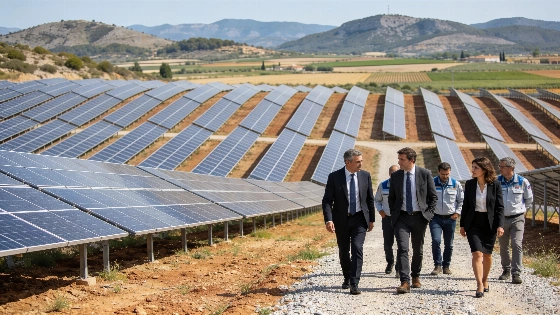
The largest solar park in Catalonia has officially started operations in Alcarràs (Lleida), marking a significant expansion of the region’s renewable energy capacity. The facility, inaugurated by President Salvador Illa, brings 300 megawatts of installed power to the grid, with an additional 100 megawatts expected in the near future. This single project will effectively double Catalonia’s total photovoltaic output beyond self-consumption levels.
President Illa, joined by Sílvia Paneque, the regional minister for Territory, and local officials, used the occasion to reaffirm the government’s commitment to accelerating the transition to renewable energy. He acknowledged that Catalonia has lagged behind the national average, with only 21% of its electricity coming from clean sources in 2025, compared to 50% across Spain. Illa stressed the need for energy autonomy, highlighting the region’s natural resources—sun and wind—as key assets.
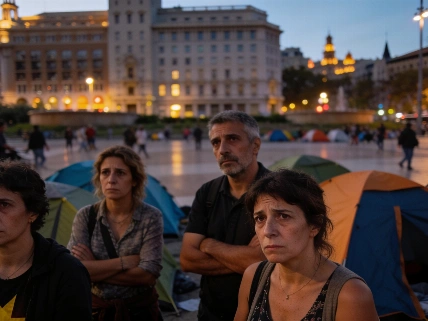
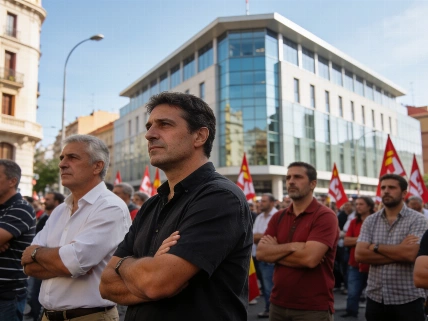
The Alcarràs project is part of the broader Plan territorial sectorial para la generación eléctrica eólica y fotovoltaica (Plater), which has become a flashpoint for controversy. More than 12,000 public comments have been submitted during the consultation phase, and over 300 municipalities, regional councils, and social organizations have voiced opposition. Critics argue that the plan’s scale and location threaten local interests and landscapes, despite government assurances that renewable installations can coexist with agriculture.
During the inauguration, both Illa and Paneque praised the Alcarràs municipality for its collaborative approach, emphasizing that the solar park was developed in a way that maintains agricultural activity. The government also plans to introduce battery storage fields at the site to improve energy management in the future. Illa admitted that such projects inevitably have a visual impact but insisted that only 2% of Catalonia’s territory is needed for renewables, and that the process will involve ongoing dialogue with mayors and farmers’ representatives.
Protests against the Plater plan have continued, including a recent demonstration near the monastery of Les Avellanes, where the regional government was meeting. Illa expressed support for the technical teams behind the plan and called for a respectful, informed debate, stating that while consensus is important, the government will make necessary decisions to avoid stagnation in Catalonia’s energy transition.
For context, Spain has seen a rapid increase in renewable energy adoption in recent years, with national targets pushing for a majority of electricity to come from clean sources. The Catalan government’s push to catch up reflects both environmental commitments and the need to reduce dependence on external energy supplies. Similar tensions between local interests and national energy goals have surfaced elsewhere in Spain, as seen in other regions facing infrastructure challenges and public resistance. In related developments, the complexities of balancing local concerns with broader policy objectives have also been highlighted in situations such as the response to the migrant influx in Ceuta, where authorities have struggled to restore order and address community tensions, as reported in coverage of Ceuta’s recent crisis.