Catalonia’s president has ruled out any budget cuts for wildfire prevention. The government signed a new protocol with provincial leaders to strengthen forest management. The move follows a challenging fire season in Girona.
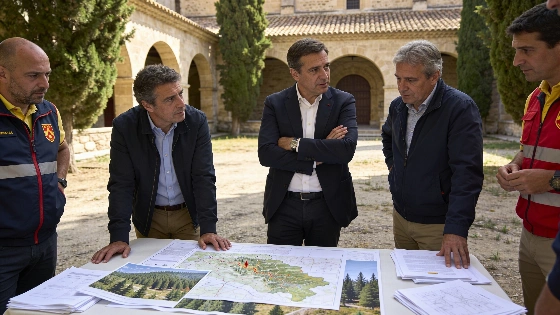
The Catalan government has made a clear commitment to maintain and even increase funding for wildfire prevention, following a summer marked by a major forest fire in Girona. At a meeting held in the historic monastery of Les Avellanes in Lleida, President Salvador Illa gathered his cabinet to underline the region’s focus on emergency response and forest management. The session opened with the signing of a protocol between the government and the presidents of the four provincial Diputaciones, aimed at improving coordination and forest care to reduce fire risk.
President Illa emphasized that not a single euro would be cut from the wildfire prevention budget. Instead, he announced plans to expand technical resources, hire more firefighters and rural agents, and strengthen cooperation between regional and local administrations. This comes after Catalonia experienced only one major wildfire this year, which burned approximately 2,300 hectares in Girona during July. The government’s approach is designed to prevent similar incidents and ensure rapid response capabilities remain robust.
The decision to hold the cabinet meeting outside Barcelona, in a rural setting, was intended to highlight the importance of forest policy and the challenges faced by local communities. The new protocol with the Diputaciones is expected to streamline forest management practices, making it easier to implement preventive measures and share resources across the region. According to El País, the government’s strategy reflects lessons learned from recent emergencies and a determination to avoid the devastating consequences seen in previous years.
While Catalonia’s approach focuses on prevention and resource allocation, other regions in Spain have faced different challenges related to emergency management and political coordination. For example, a recent dispute in Ceuta over the handling of migrant minors highlighted the complexities of intergovernmental cooperation during crises. In Catalonia, the emphasis remains on proactive measures and unified action to protect both residents and natural landscapes.
Forest fires are a recurring threat in Mediterranean climates, and Catalonia’s landscape, with its extensive woodlands and dry summers, is particularly vulnerable. The region has invested heavily in early detection systems, firebreaks, and public awareness campaigns. The government’s renewed commitment to funding and coordination is seen as a critical step in maintaining these efforts. The cabinet meeting at Les Avellanes will conclude on Saturday, with further discussions expected on long-term strategies for environmental protection and emergency response.