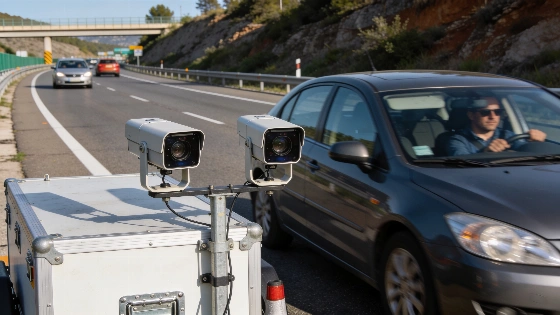
From 2027, Catalonia will introduce AI-powered cameras to catch drivers using phones on their laps. The measure aims to reduce accidents, as mobile use is a factor in one in four crashes. Authorities tested the system on major highways.
Catalonia will introduce a new AI-based monitoring system in 2027 to identify drivers using mobile phones on their laps, a practice linked to a significant share of road accidents. The Catalan Traffic Service (SCT) confirmed the rollout after a pilot project on the region’s highways demonstrated the technology’s ability to detect this previously hard-to-spot infraction.
The system, which uses two high-definition cameras—one horizontal and one overhead—mounted on mobile trailers, leverages advanced artificial intelligence algorithms to continuously analyze driver behavior. Unlike previous controls, it can spot when a driver is consulting a phone placed on their legs, not just held in hand. According to SCT director Ramon Lamiel, this behavior is as dangerous, or even more so, than holding the phone, since it diverts the driver’s gaze entirely from the road.
During the pilot, which lasted just over a month, the SCT deployed the technology on the A-2 and AP-7 highways. The AI reviewed footage from 310,000 vehicles and flagged 8,500 mobile phone violations—about 2.8% of all drivers observed. Notably, half of these cases involved drivers looking at phones on their laps. For comparison, human reviewers identified 13,000 infractions, or 4.4% of the total, suggesting the AI currently detects around 64% of offenders but still has room for improvement.
The system also monitored seatbelt use, analyzing 410,000 vehicles. The AI detected 4,500 violations (1.1%), while human checks found 6,100 (1.5%). No fines were issued during the trial, which also involved international partners to further develop the technology. The SCT plans to continue refining the AI and expand its use across Catalonia’s road network as part of the 2027–2030 Road Safety Plan.
Authorities highlight that mobile phone use is a factor in 25% of traffic accidents in Catalonia. The new system is expected to help address this by enabling enforcement even when drivers try to hide their phones from view. The mobile camera units can be relocated to target high-risk areas, focusing on stretches of road with a history of distraction-related incidents. The SCT aims to use the data to train the AI further and improve detection rates before the system becomes fully operational.
Across Spain, distracted driving remains a leading cause of accidents, with mobile phone use a persistent challenge for traffic enforcement. Traditional roadside checks often miss drivers who keep their phones out of sight. By adopting AI-powered surveillance, Catalonia joins a growing number of regions worldwide experimenting with technology to improve road safety. The move reflects a broader trend in Europe toward integrating artificial intelligence into traffic management and law enforcement, with the goal of reducing fatalities and serious injuries on the roads.