Ceuta has spent eight weeks under migration pressure. The government says the PP is blocking the transfer of nearly 3,000 minors, while new shelters and €88 million have failed to break the deadlock.
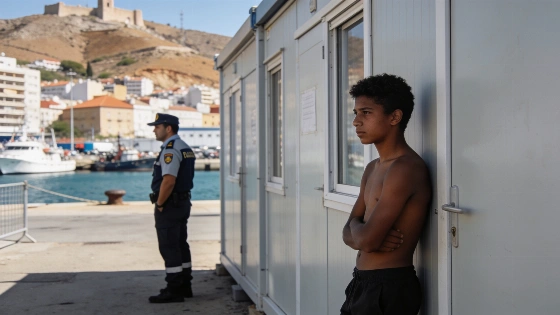
The government has placed the blame for Ceuta's prolonged migration crisis on the PP. Nearly 3,000 minors remain in the autonomous city. Alberto Núñez Feijóo and Juan Jesús Vivas oppose their transfer to mainland communities. The dispute has entered its eighth week, with no quick solution in sight. Spanish authorities and local media put the number of registered minors in the reception system at roughly 2,100 to 2,400. Hundreds more have yet to be identified and are reportedly sleeping rough.
Ángel Víctor Torres has toughened the government's message since Pedro Sánchez appointed him the sole authority managing the crisis. Torres says the children cannot leave Ceuta because the PP refuses to receive them in the communities it governs. His criticism is directed at both Feijóo and the president of Ceuta.
Spain’s Youth and Children’s Minister Sira Rego says most of Ceuta’s unaccompanied minors will not be returned to Morocco. Each case must be assessed individually and handled under the legal safeguards that apply to children.
Torres has challenged the opposition to show its support for the city through practical steps. The PP controls 11 autonomous communities, in addition to Ceuta and Melilla, and shares power in the Canary Islands. Madrid says the minors should either stay under Ceuta's protection through an agreement with the receiving community or be moved to other parts of Spain. The government says family reunification in Morocco should be considered when it is safe and properly verified. Other children should go to mainland Spain or remain under the protection of local authorities.
The political fight is blocking the question that needs an answer now: where the minors will live and who will take responsibility for them.
The PP's stated position is to expel all immigrants who entered irregularly. Feijóo and Vivas repeated that position on Monday with the support of Manfred Weber, the leader of the European PP. Génova describes the situation as hybrid warfare attributed to Morocco. It also warns that moving the young people could encourage another mass border crossing like the one on 30 and 31 July.
A separate government funding package cited in reporting provides €118 million for humanitarian reception, including €63.6 million specifically for the care of migrant minors. The funding is intended to expand protection and reception capacity, but it has not resolved the dispute over transfers from Ceuta.
The political fight will continue this week. The PP and Vox are due to attend a Saturday demonstration in Madrid called by Sociedad Civil Española in defence of Spain. The protest will also call for new elections. Torres has asked the PP for fewer demonstrations and a clear plan for housing the minors. The next demonstration is scheduled for 27 September. Ceuta is expected to become part of a wider fight over migration policy and early elections.
Authorities are trying to ease the pressure with new facilities and transfers. The Council of Ministers has approved €88 million for reception centres in Ceuta. About 1,700 immigrants were moved to port facilities last Friday after the Audiencia Nacional rejected an urgent request from the Sindicato Unificado de Policía to suspend their use as a camp. The government says more spaces will open this week and next. Reporting on the wider response says additional humanitarian funds have also been set aside for reception and child protection.
Torres puts the current total at 6,000 adults in accommodation and 2,000 minors. The government has identified 2,321 minors. Between 500 and 600 are sleeping on the streets. About 500 more have been registered in facilities meant for adults. Torres says they will be moved to suitable facilities when space is ready. The law does not allow adults and minors to share the same facilities. The Interior Ministry has separately referred to about 2,400 registered minors, counting children who arrived in the days before the mass border crossing on 30 and 31 July. The totals change depending on the date and category being counted. All of them point to a continuing shortage of space.
The adult caseload is moving faster. Since 10 August, 6,791 people have voluntarily returned to Morocco, including 222 on Monday and 1,309 during the past week. There have also been 318 expulsions. Torres says 26% of adults, mainly from the Maghreb, are not seeking international protection. Many return to Morocco after being told during registration that they are unlikely to qualify as refugees. The government is also trying to reduce the maximum 12-week period for deciding these cases.
The minors are harder to deal with. Family reunification is the government's priority, but Rabat has not answered more than 600 files over the past five years. Authorities therefore accept that reunification will not be possible in most cases. The immediate alternative is to distribute the children across Spain. The PP refuses to help with that plan. As Euronews reported, Rego has said most of the minors are expected to remain in Spain rather than be sent back automatically. Each case must still go through the required legal and individual assessment.
The figures show that Ceuta is not dealing with one administrative delay. The city is caught in a fight over who is responsible. Madrid is providing money and reception space, but it cannot move the minors without cooperation from Ceuta and the mainland communities. The PP is calling for returns while rejecting relocation. Children are still sleeping outside. With no agreement on their care, the political veto is prolonging the crisis alongside the pressure from new arrivals.
The dispute has also reached the European level. On 17 September, the European Parliament called for stronger protection of the European Union's external borders and faster returns for people who have no right to remain, including minors. It also said any action must comply with EU law and international obligations. That position adds pressure for faster procedures, but it does not remove the need for individual safeguards in children's cases.
The government's approach remains case by case. It calls for verified and safe family reunification where possible, transfers to mainland Spain for others, and continued protection in Ceuta when no immediate alternative exists. The open question is whether political authorities can agree on who will take responsibility before temporary accommodation and street homelessness put even more pressure on the city.