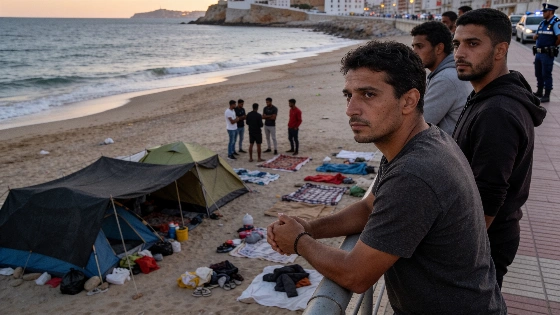
Ceuta is experiencing a surge in hostility and violence as thousands of migrants remain stranded. Residents report growing fear, while divisions between Muslim and Christian communities are emerging. Authorities struggle to regain control.
Ceuta has entered a period of acute crisis after more than 80,000 people crossed the border illegally from Castillejos in just one month. The city, home to 80,000 residents, now finds itself overwhelmed by thousands of migrants living in makeshift camps, on beaches, and in abandoned buildings. The situation has triggered a wave of fear and anger among locals, with reports of increasing hostility and violence directed at migrants.
Residents near Benítez beach have refused to leave their homes, fearing occupation by migrants sleeping on the sand. Some have already faced break-ins. Tensions erupted when a group of locals stormed a migrant camp, destroying shelters and burning belongings. Chants of “A por ellos, oé” echoed before the attack. In another incident, a woman was injured after confronting a migrant in her garage. Night patrols by residents armed with sticks have become common, targeting migrants in the city center.
The influx has left the city on edge. Official estimates of migrants on the streets vary: the central government cites 5,000, while local authorities claim over 9,000. Most migrants carry little more than a plastic bag and a mobile phone, seeking food and shelter wherever possible. Many, like 20-year-old Handala Benktib from Tetuán, say they have no intention of returning to Morocco, despite the uncertainty of their future in Spain.
For local families, daily life has changed dramatically. Many children have not left their homes for a month, kept inside by parents afraid of attacks. Some families are relocating to the mainland, enrolling children in schools outside Ceuta. The sense of abandonment by the government is widespread, with the city’s president describing Ceuta as “on the verge of collapse.”
Migrants sleep in parks, on rooftops, and in public spaces. Supermarkets are guarded by military personnel to control crowds and prevent panic. Some migrants with resources buy expensive goods, but most wander the city in the same clothes they wore when crossing the border. The city’s appearance has suffered, with makeshift camps turning public areas into temporary settlements, especially vulnerable during rain.
Daily protests have become routine, with participants wrapped in Spanish flags demanding government action and the expulsion of migrants. Demonstrations often end at Benítez beach, facing off with migrants under police protection. Despite knowing they are unwelcome, most migrants refuse to leave, hoping for a chance to stay in Spain.
The crisis is straining Ceuta’s unique social fabric. The city, nearly evenly split between Christian and Muslim residents, has long prided itself on peaceful coexistence. Now, incidents of aggression and discrimination are reported not only against migrants but also against local Muslims. Some businesses serving migrants face boycotts, and Muslim residents report harassment from Christian neighbors.
Community leaders warn that the situation could escalate further if tensions are not addressed. Volunteer-run shelters, like the one managed by Abdellah Mustafa, provide refuge for hundreds of women and children, but resources are stretched thin. Mustafa, who intervened to protect a woman from assault, now coordinates aid with minimal support from authorities, urging the government to take responsibility for vulnerable groups.
The government has announced plans to move migrants off the streets within two weeks, with new accommodation sites being prepared for registration and expedited deportation procedures. However, experts warn that the process could take months, as seen during the 2021 crisis when migrants remained in Ceuta for up to eight months.
Ceuta’s crisis highlights the challenges of managing sudden mass migration at the EU’s southern border. The city’s economy relies heavily on public sector jobs and services, with unemployment at 22.2% and clear economic disparities between communities. Traditionally, Ceuta has celebrated its religious and cultural diversity, but the current crisis threatens this balance. The coming weeks will be critical as authorities attempt to restore order and prevent further social division.