Ceuta’s border with Morocco, once a symbol of coexistence, now faces strict controls and rising tension. Residents recall easier times as migration and political disputes reshape daily life and cross-border commerce.
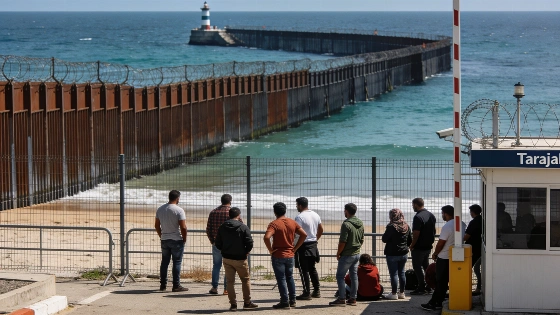
The border between Ceuta and Morocco, once marked by fluid movement and daily exchanges, has become a focal point of tension and disruption. In recent weeks, the Tarajal crossing saw more than 70,000 people attempt to enter Ceuta, triggering a humanitarian crisis and resulting in dozens of deaths at sea. The city, known for its unique blend of Muslim, Christian, Jewish, and Hindu communities, is still struggling to recover from the shock. Authorities have extended the border barrier into the sea, further restricting what was once an open and lively passage.
For decades, Ceuta’s residents and their Moroccan neighbors enjoyed a routine of informal trade and social visits. Crossing the border required little more than a nod, with families shopping, dining, and working on both sides. That changed dramatically after the COVID-19 pandemic, which led to a complete closure in 2020. Since then, migration pressures and political disputes have hardened the border, making even simple trips a challenge. Locals recall a time when children could play across the fence and return home for dinner, but today, the physical and psychological barriers are higher than ever.
Many in Ceuta describe a strong sense of Spanish and European identity, regardless of religious background. Yet, the city’s unique position means it often feels overlooked by national politics, especially during crises. The recent influx of migrants nearly matched Ceuta’s official population, but the city avoided widespread violence, a fact some attribute to its tradition of coexistence. However, tensions have grown, with some residents blaming each other for aiding new arrivals, and fears of reprisals from across the border remain present.
Economic and social exchanges have suffered. Prices in Morocco have risen, and Spain’s efforts to protect local commerce have made border crossings slower and more complicated. What was once a quick Sunday trip for groceries now involves hours-long waits and stricter checks. The days of tolerated small-scale smuggling and easy movement are gone, replaced by suspicion and bureaucracy. As one resident noted, the sense of mutual benefit has faded, replaced by frustration and nostalgia.
Ceuta’s multicultural fabric remains visible, with events like the Hindu community’s procession of Ganesh to the city’s Catholic patron saint highlighting ongoing coexistence. Yet, political and diplomatic strains are never far from the surface. The city’s history of living “just in case”—with many families keeping a second home on the mainland—reflects a persistent sense of uncertainty. Recent migration waves have deepened divisions, both within Ceuta and with Morocco, as highlighted by the growing presence of anti-Muslim rhetoric from parties like Vox and the strong local pushback against it.
Amid these challenges, the strategic importance of the Strait of Gibraltar adds another layer of complexity. Any disruption in these waters could have global economic consequences, a fact not lost on local leaders. Political unity in Ceuta has held firm during the crisis, with the exception of far-right groups facing strong resistance from the city’s Muslim population. The situation remains tense, with many residents longing for the days when the border was a gateway rather than a barrier.
As the situation evolves, the impact on families separated by the border and the broader region continues to grow. The humanitarian and political dimensions of the crisis have drawn international attention, with local stories echoing across Spain and beyond. For example, Moroccan families have turned to social media to search for missing relatives after the mass crossing, as detailed in this report on families using online networks to reconnect. The future of Ceuta’s border remains uncertain, but its residents continue to adapt to a reality shaped by new barriers and old memories.
Ceuta’s experience is a reminder of the delicate balance between security, migration, and community ties at Europe’s southern edge. The city’s history of coexistence faces new tests as authorities and residents navigate a landscape transformed by global and regional pressures. The outcome will shape not only local life but also broader debates on borders and integration in Spain and the EU.