Authorities in Ceuta are set to dismantle the Trampolín beach camp. With far too few beds at the new port shelter, most migrants face another night outside, caught between violence, uncertainty, and official silence.
Police patrols are now a daily sight at Trampolín beach in Ceuta, where thousands of migrants wait for word on when they will be forced to leave. The city is finishing a new shelter at the port, but with just over a thousand beds, most people will be left outside. Rumors of a mass transfer have spread through the camp, and each night brings new fights and growing fear.
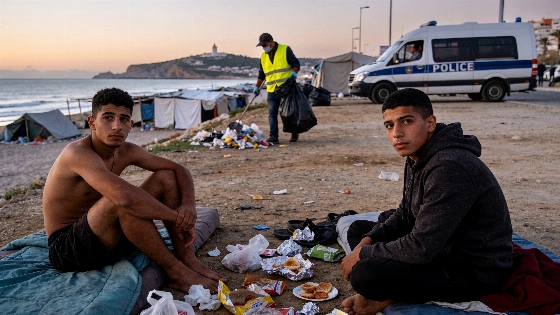
No one knows exactly how many people are at Trampolín—estimates hover around 4,000—but everyone agrees the camp is unwanted. The Red Cross hands out basic food: bananas, juice, and sandwiches heavy on bread. Along the shore, makeshift tents and piles of trash mark the camp’s boundaries. Every night, people pack their few belongings, ready to move if police arrive at dawn.
On September 14, Spanish authorities transferred over 800 migrants from the Loma-Colmenar area to the new Los Rosales temporary center in Ceuta, as confirmed by Reuters.
Inside the camp, tensions run high. Fights break out over food, space, or old arguments. Karim, from Meknes, has left his hut and now sleeps hidden in the hills, unable to rest with the noise and stone-throwing. Others, worn out by the chaos, have moved to Benítez beach, where a smaller camp is forming. Calm never lasts long—one moment it’s quiet, the next a brawl sends people running into the dark.
For many, a spot in the new port shelter is the only hope. But with so few places, most know they will be left behind. Some, like Ismail, wonder if asylum is even possible. He weighs his choices: wait for a transfer and risk being turned away, or try another dangerous crossing. No one has answers, and the uncertainty is crushing.
Children are among the most exposed. Near the desalination plant, a group of minors huddle under thin blankets, trying to keep warm. They have stopped trying to enter the city’s official shelters, always told there is no space. At sunrise, the routine starts again—some go to the improvised mosque, others look for water, and a few help city workers clean up the debris left behind each night.
According to Spanish press and international reports, the authorities aim to expand Ceuta’s temporary shelter capacity to about 6,000 places, but as of the latest updates, only around 4,300 spots are available. This means a significant number of people remain outside the official accommodation system, and the crisis extends far beyond a single camp, with thousands—including approximately 2,100 minors—still living in improvised conditions on beaches and city streets.
People living nearby watch the camp with a mix of resignation and frustration. City cleaning crews come each morning to collect trash, but the deeper crisis remains. Larbi, a former taxi driver from the Rif, says the situation is a source of shame. He and his son have reinforced their shelter with cardboard, but nightly violence and the threat of eviction make it impossible to feel safe.
The city is rushing to open the new port shelter, but the numbers do not match the need. Only a small share of the camp’s residents will get a place, leaving most outside. The lack of clear information fuels anxiety and rumors. Many believe the transfer will happen on a symbolic date, like the 50th day since their arrival, but there is no official word.
National media have covered Ceuta’s migration crisis, with political fallout and debate over the city’s response. But on the ground, the reality is far from the headlines. Migrants at Trampolín are left to deal with broken promises, internal conflict, and silence from officials.
Spain’s migration system is again struggling to cope with pressure at its borders. Temporary camps, rushed transfers, and little communication have created a cycle of instability that hits the most vulnerable hardest. Until the government addresses the crisis with real resources and clear planning, Ceuta’s beaches will remain a sign of both political deadlock and human cost.