Ceuta is still far from normal after a massive influx of migrants. Minister Félix Bolaños admits the government had no advance data on the scale. Political tensions rise as resources are deployed to restore order.
Ceuta continues to face a state of disruption weeks after thousands of migrants crossed its borders in late July. Minister of Presidency and Justice Félix Bolaños acknowledged before the National Security Commission that the city remains in an abnormal situation, despite ongoing government efforts to restore stability. He insisted that all necessary human and material resources are being mobilized, but rejected accusations from opposition parties that the government responded too late or abandoned Ceuta during the crisis.
Bolaños made clear that the government had no prior intelligence or reports indicating the scale of the migrant influx. This admission came as the Partido Popular (PP), Vox, and even some government allies sharply criticized the handling of what they now call a “polyhedral polycrisis.” The minister, one of the cabinet’s most influential figures, appeared before the commission after the conflict was classified as a matter of highest national interest. He attempted to reassure Ceuta’s residents, but conceded that normality has not returned, citing 70,000 irregular border crossings in hours and 1,475 minors already registered.
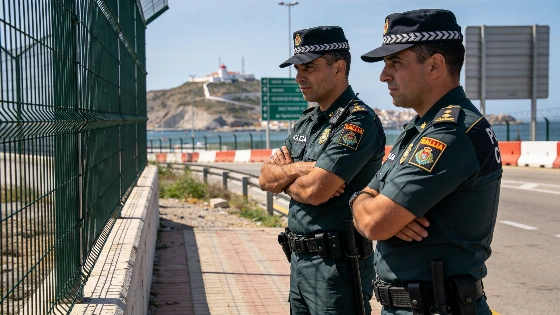
In response to the crisis, Bolaños detailed a series of government actions: €180 million in investments since October 2022, four visits by the president, and an increase in security forces—over 500 additional police and civil guards, bringing the total to 1,700. In the justice sector, he noted that the General Council of the Judiciary could receive immediate reinforcements if requested, and highlighted a 300% increase in staff at the Institute of Legal Medicine, which enabled rapid autopsies and identifications in the aftermath of the surge.
Judicial activity in Ceuta has also risen, with a 4.2% increase in cases this August compared to 2025. Bolaños acknowledged this as a challenge but dismissed claims of a dramatic crime wave, countering Vox’s assertion of 200 daily offenses. He reported 594 complaints filed in August and urged for accurate accounting. Throughout his appearance, Bolaños emphasized the need for a humanitarian and constitutional approach, echoing demands from left-wing coalition partners.
One factor the minister highlighted was the “distorted interpretation” on social media of a July Supreme Court ruling regarding the non-return of migrants who do not bypass physical barriers. However, neither PP nor Vox, nor other parties, accepted this as the sole explanation for the mass arrival. Government allies such as PNV, EH Bildu, ERC, and Junts agreed that the crisis was poorly managed and that the government underestimated its scale and reacted too slowly. Many also criticized Prime Minister Pedro Sánchez for not interrupting his vacation, though Bolaños defended Sánchez’s remote involvement from the Canary Islands.
Debate over Morocco’s role intensified, with no party—right, left, or government ally—accepting the official line that Morocco was not complicit. Bolaños firmly denied any evidence of Moroccan orchestration, warning that speculation and accusations could harm diplomatic relations. He also pointed out that Morocco is holding elections on September 23, but avoided deeper discussion of possible motives.
PP and Vox described the events as an “invasion,” with Vox demanding a treason trial for the president and PP calling for elections due to what they see as government weakness. Bolaños countered that no previous administration had done more for Ceuta, reiterating that there were no advance warnings about the scale of the migrant flow and rejecting claims of Moroccan involvement as unfounded.
The ongoing crisis in Ceuta has placed significant strain on local services and heightened political tensions. As previously reported, the city’s health system has also faced severe pressure following the sudden influx, with emergency measures and increased support for medical staff now in place. For more on the impact on Ceuta’s healthcare, see this detailed report on the challenges facing local hospitals.
Ceuta’s unique position as a Spanish enclave bordering Morocco has long made it a focal point for migration issues. The recent events have reignited debate over Spain’s border management, the adequacy of early warning systems, and the balance between humanitarian obligations and security. The government’s response, and the political fallout, are likely to shape national discussions on migration and border policy in the months ahead.