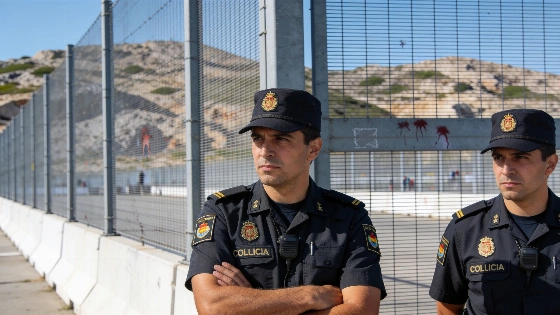
Ceuta's migration emergency has forced EU leaders to confront urgent calls for action. Spanish and European officials debate tougher border measures and a permanent EU presence in the city.
Ceuta has become the focus of a migration crisis that Brussels can no longer ignore. This week, the city’s president, Juan Jesús Vivas, warned European officials that Ceuta is a "pressure cooker" close to bursting. He argued that if Ceuta’s situation spirals out of control, the consequences will reach Spain and the rest of the European Union.
Vivas traveled to Brussels with support from leading conservatives, including Manfred Weber, president of the Partido Popular Europeo (PPE). Their main goals: secure a permanent EU presence in Ceuta, expand the roles of Frontex and the European Asylum Agency, and obtain emergency financial support. They are also pushing for Ceuta to receive special status as the EU’s only land border with Africa. The European Commission says Spain’s request for emergency funding and more agency support is a priority, but final decisions are on hold while Brussels waits for more details from Madrid.
"Spain has requested €82.7 million from the Asylum, Migration and Integration Fund (FAMI) and over €32 million from the Border and Visa Management Instrument to address the Ceuta crisis."
Government data cited in Euronews
The urgency comes after a spike in irregular migration at the end of July, which set off a political storm in Spain and renewed calls across Europe for stricter migration controls. Hardline voices have grown louder, especially as far-right parties gain ground in several EU countries. The recent elections in Saxony-Anhalt, Germany, have added to the pressure on mainstream parties to take a tougher stance. Spanish media report that thousands of migrants have arrived in Ceuta since July 30–31, including at least 1,612 unaccompanied minors, overwhelming local services.
While Vivas made his case in the European Parliament, Spain’s foreign minister, José Manuel Albares, met with Magnus Brunner, the EU’s Commissioner for Home Affairs and Migration. Both sides want Ceuta and Melilla to play a bigger role in EU programs and are calling for stronger European involvement at the southern border. Albares has suggested "Europeanizing" the two autonomous cities, but Vivas argues that only a unique legal status and inclusion in the EU migration pact will ensure their stability and security. The issue has reached the top of the political agenda, with European Commission President Ursula von der Leyen previously indicating that Frontex’s presence in Ceuta could be reinforced if needed.
The European Commission has confirmed that Spain’s requests for emergency funding and Frontex deployment are being handled urgently. A technical team from the Commission is set to visit Ceuta by the end of the week, and Weber is expected to travel there on September 21. These steps mark a shift from distant discussions to direct involvement on the ground. Commission spokesperson Markus Lammert says the EU is processing Spain’s requests quickly, but some key questions still need answers from Spanish authorities.
"In addition to EU-level support, the Spanish government has approved a separate national aid package of €309 million for Ceuta, allocated to healthcare, education, justice, water treatment, security forces, humanitarian aid for minors, and business support."
Euronews
Vivas has also urged the EU to press Madrid for a concrete plan to return all irregular migrants to Morocco, with a fixed deadline. He accuses Morocco of using migration flows as leverage against Spain’s territorial integrity, a tactic that, if left unchecked, could weaken the EU’s external borders. This concern appears in several official and media reports, which note that the political fallout from the Ceuta crisis has spread beyond Spain and is shaping wider European debates on migration and the future of Frontex.
With the EU heading into a major election year in 2027, the Ceuta crisis is being used by member states that favor stricter migration rules to push for controversial measures. One example is the creation of deportation centers in third countries, a provision included in the new returns regulation adopted before the summer. The political climate is shifting, with most EU governments now supporting tougher border management and more cooperation with North African states. According to several European news outlets, Ceuta is now seen as a test case for whether the EU can adapt its migration policies to real border challenges.
Ceuta’s situation highlights the weaknesses in Europe’s migration system and the limits of solidarity when national interests are at stake. The city’s call for special status is more than a local demand—it is a test of the EU’s willingness to adjust its policies to the realities at its borders. If Brussels offers only symbolic gestures, the pressure will remain and could strengthen the very forces the EU wants to contain, leaving Ceuta and Europe more exposed.