Security forces in Ceuta report growing violence and lack of resources. Recent attacks on police and military highlight urgent gaps in protection. Calls for government action intensify as tensions persist.
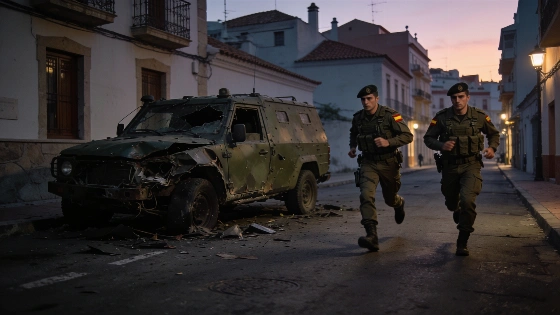
Ceuta’s security situation has sharply deteriorated in the wake of the mass migrant entry from Morocco at the end of July. In the latest incident, four soldiers from the Grupo de Regulares were ambushed at dawn in the Benzú area by a group of 30 to 40 foreign men. The soldiers, traveling in an unarmored vehicle and lacking adequate protective gear, were surrounded and pelted with large stones. Their vehicle was severely damaged, forcing them to flee on foot while still under attack. All four sustained injuries and had to call emergency services for help, prompting a rapid response from both the Policía Nacional and Guardia Civil. The operation resulted in 12 arrests, though several attackers managed to escape. Another military patrol was dispatched to support the emergency response. According to military personnel on the ground, those deployed in Ceuta feel exposed and unsupported as violence becomes more frequent.
This ambush is not an isolated event. Just days earlier, a Guardia Civil officer off duty was assaulted near Muelle Cañonero Dato. After refusing a demand for money from a Moroccan man, the officer was attacked by a group of six, suffering punches and kicks even after identifying himself as law enforcement. Three suspects were initially detained, and two adults remain in provisional custody, facing charges including assault on an officer, bodily harm, and resisting arrest.
Police units sent to reinforce Ceuta during the ongoing crisis, such as the Unidad de Intervención Policial (UIP) and Unidad de Prevención y Reacción (UPR), have also reported being targeted with stones and physical aggression while patrolling the streets. Officers describe a shortage of personnel and resources, making it difficult to manage the scale of the migrant influx and respond to violent incidents. The Policía Nacional, responsible for public safety in Ceuta, currently operates with 190 riot officers, only 40 of whom are local, a reinforcement many consider insufficient given the pressure on the city.
Security forces are now tasked with containing the migrant flow, monitoring gathering points, intervening in violent episodes, and preventing further escalation between locals and newcomers. The image of soldiers abandoning a destroyed vehicle under attack has become a stark symbol of the current crisis. While the government maintains that resources are being mobilized to restore order, unions and professional associations continue to demand more personnel, better equipment, and stronger protection for those on the front lines. As noted in a related report, the situation in Ceuta remains far from normal, with authorities under pressure to respond to ongoing security challenges.
According to official data, Ceuta has historically been a focal point for irregular migration due to its proximity to Morocco and its status as a Spanish enclave. The city’s security forces, including the Policía Nacional, Guardia Civil, and military units, are often stretched thin during periods of increased arrivals. Professional associations such as the Asociación de Tropa y Marinería Española have repeatedly called for urgent government action to address the lack of resources and protection. The current crisis has reignited debate over Spain’s border management and the adequacy of support for those tasked with maintaining order. The ongoing tension underscores the need for a coordinated response to ensure both public safety and the well-being of security personnel operating in Ceuta.