Several of Brad Pitt's children and others in the US are formally removing their father's surname. The process reflects personal and emotional reasons, often tied to family separation and identity. Legal and practical hurdles remain significant.
In the United States, a growing number of individuals are taking legal steps to remove their father's surname, a move that has recently included several of Brad Pitt's children. The trend, highlighted by recent court filings and personal stories, underscores how family relationships and personal identity are increasingly shaping decisions about names.
In California, 25-year-old Hannah recently completed a legal process to change her surname, combining her mother's maiden name with her husband's. For years, she had used her mother's surname in daily life, while her official documents still bore her father's name. The change, which took several months and cost hundreds of dollars, marked a deliberate break from a father with whom she had little contact since childhood. Hannah described the process as both necessary and overdue, noting that her new surname better reflects the relationships that matter most to her.
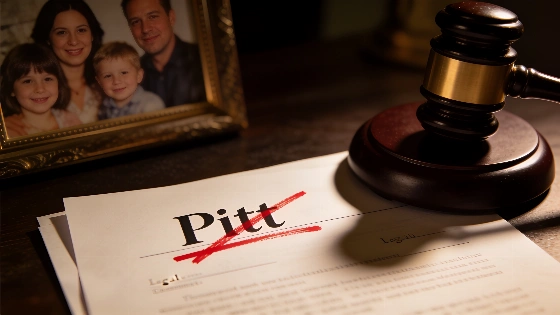
At the same time, the children of Angelina Jolie and Brad Pitt have made similar moves. According to media reports, Zahara Marley Jolie-Pitt and Maddox Chivan Jolie-Pitt filed documents in April to remove 'Pitt' from their surnames. In line with legal requirements, they published their intentions in a local newspaper for four weeks during June and July. Both have already used the surname 'Jolie' in public settings, such as Zahara's graduation and Maddox's film credits. Another sibling, Shiloh, completed her own surname change earlier in 2024. Zahara and Maddox are expected to appear in court in September for final approval.
The legal process for changing a surname in the UK and US varies by region and can involve multiple steps, including public notices and court appearances. In England and Wales, adults can use an unenrolled or enrolled deed poll, with costs ranging from £35 to just over £53. In Scotland and Northern Ireland, the process is similar but handled by different authorities. For minors under 16, parental consent is required, which can delay changes for those seeking to distance themselves from a parent's name.
For many, the decision to change a surname is deeply personal. Maggie, from Lincolnshire, described her relief after switching to her mother's surname at age 16, having disliked her father's name since childhood. She cited both emotional distance and negative associations as reasons for the change. Experts note that such decisions often serve as a psychological boundary, helping individuals separate from difficult family histories or relationships.
Family counsellors and researchers point out that estrangement from parents can bring a mix of emotions, including grief and a sense of freedom. The process of changing a surname is rarely impulsive; studies suggest it is usually the result of careful consideration over time. However, the administrative burden remains significant, with requirements to update official records, notify institutions, and sometimes publish intentions in local media.
In the US, the cost and complexity of legal name changes can be a barrier. Hannah's experience in California involved a $400 filing fee and an additional $130 for newspaper publication, a step she described as outdated. Despite these hurdles, the desire to align one's legal identity with personal relationships continues to drive individuals to pursue formal name changes.
Changing a surname is not only a legal act but also a statement about belonging and identity. As more people take this step, the issue highlights ongoing shifts in family dynamics and the importance of personal choice in defining one's own name. The cases involving Brad Pitt's children have brought renewed attention to the topic, reflecting broader trends in how individuals navigate family ties and personal history.
In Spain, the process of changing surnames is governed by strict legal requirements, and typically both paternal and maternal surnames are used. While the trend seen in the US may not directly translate to Spanish practice, the underlying issues of identity and family connection are increasingly relevant in a global context. The topic also raises questions about the balance between tradition and personal autonomy in naming conventions, a discussion that continues to evolve across different societies.