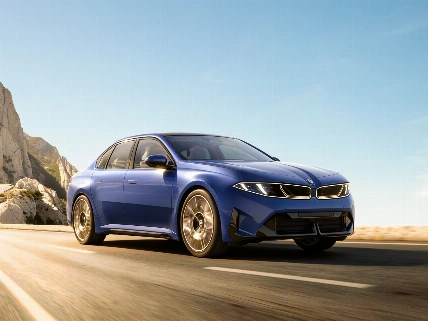
BYD and Geely have become impossible to ignore in the European car market. MG has also gained ground. Their rapid ascent has unsettled established brands and prompted a rethink of what buyers expect, as Chinese models account for a growing share of new registrations in countries such as Spain. ANFAC figures put Chinese brands at 14.27% of Spain’s passenger-car market by the end of July, a steep rise in less than five years. Market-share figures depend on the channel being measured: Chinese brands have approached 15% of Spain’s overall market and exceeded 20% among private buyers. Nearly 40 Chinese brands have entered the country, including Geely and GWM. Aion, Zeekr and Denza are also among the entrants.
The global picture is more nuanced. Chinese manufacturers have made impressive inroads, but have not overtaken the leading carmakers in total sales. The International Organization of Motor Vehicle Manufacturers (OICA) puts global vehicle production in 2025 at 96.4 million units. Production and sales are distinct measures and should not be conflated with the article’s reported 99.8 million vehicles sold, up 4.7% from the previous year. China remains the engine of growth, with 34.5 million vehicles sold, about 35% of global registrations. A country’s market size, but, is not the same as the combined worldwide sales of its automakers.
Toyota was the world’s top-selling automaker in 2025, moving 11.32 million vehicles across its brands, including Lexus and Daihatsu. Hino is also part of the group. Toyota has held the top spot for six consecutive years. Volkswagen Group followed with 8.98 million units, then Hyundai with 7.27 million and General Motors with 6 million. Stellantis rounded out the top five. A separate comparison of corporate-group totals also places Toyota ahead of BYD. Volkswagen Group and Hyundai Group rank ahead as well, underscoring why group, brand and joint-venture figures need to be distinguished when comparing rankings.
Chinese brands, but, are climbing fast. BYD sold 4.6 million vehicles in 2025, securing sixth place globally. SAIC followed closely with 4.51 million, ahead of Ford, which ranked eighth with 4.4 million units. Geely entered the top ten with 4.12 million vehicles, ahead of Honda, which finished tenth with 3.52 million. SAIC’s joint ventures with Volkswagen and General Motors add an accounting wrinkle: totals can be difficult to compare unless they specify whether vehicles are counted as consolidated sales, retail registrations or joint-venture output.
Chinese automakers have yet to claim the global sales crown, but their momentum is especially clear in electric and plug-in hybrid vehicles. BYD has surpassed Tesla to become the world’s largest producer of electric and plug-in hybrid cars. SAIC and Geely are also appearing in international EV rankings. Leapmotor has joined them, along with GAC. In Spain, data reported by Ideauto and ANFAC showed Chinese brands exceeding 150,000 registrations in 2026, a 15.7% market share and more than 21% of private-channel sales. By 22 October, BYD had registered 36,755 vehicles, up 105% year on year, while MG had recorded 35,657, down 4.7%. BYD’s reported sales mix, 41% fully electric and 59% plug-in hybrid, shows that growth is not being driven by battery-electric models alone.
The broader European trend reflects that product mix. S&P Global Ratings data cited by Spanish reporting put Chinese manufacturers at 8.4% of the EU-30 light-vehicle market in the first half of 2026, compared with 0.7% in 2021. Their share was reported at 11.8% in Spain, while Chinese plug-in hybrids accounted for 27.1% of the EU-30 plug-in-hybrid segment, compared with 12.7% for fully electric vehicles. The figures point to the growing role of plug-in hybrids alongside battery-electric cars as Chinese brands expand across Europe.
China’s presence in electric-vehicle exports is also striking: four out of every five electric cars built in China and shipped abroad now carry a Chinese badge. That share continues to rise as these brands expand across Europe and Latin America. Their reach also extends to the Middle East and Southeast Asia. Recent surveys reflect shifting buyer preferences. One highlighted by a major US study on car features shows how consumer priorities are developing alongside the rise of new players.
Chinese brands are rewriting the rules of the global car market, while established giants still hold the lead in total sales. Their gains are increasingly visible across markets and powertrains, but market share and rapid growth do not by themselves amount to a global sales crown. The next few years will show whether China’s expansion translates into broader dominance or established leaders adapt and hold their ground.