Citric acid is a popular solution for removing limescale from toilets and taps, but using it incorrectly can cause lasting damage. Experts stress the importance of adapting your cleaning method to each surface and warn against mixing citric acid with bleach.
Many Spanish households turn to citric acid as a natural remedy for stubborn limescale on toilets and taps. Yet, leading bathroom brands like Hansgrohe, Geberit and Duravit caution that a one-size-fits-all approach can do more harm than good. Each surface in the bathroom—whether ceramic, chrome, or plastic—reacts differently to acidic cleaners, making it essential to tailor your method for safe and effective results.
Different Surfaces, Different Rules
Limescale forms when minerals in water, mainly calcium and magnesium, crystallize on surfaces. On taps, these deposits often build up on chrome finishes, seals, and aerators. In toilets, they cling to ceramic and hide beneath the rim. Hansgrohe recommends using a mild citric acid-based cleaner applied with a soft cloth for taps, never spraying the product directly or using abrasive tools. Geberit and Duravit allow diluted citric acid on sanitary ceramics, but stress the importance of following recommended contact times and rinsing thoroughly to avoid damaging finishes or seals.
Popular home recipes suggest dissolving two or three tablespoons of citric acid in hot water and leaving it overnight. While this can work for some ceramic surfaces, experts warn against applying the same method to taps, shower screens, or countertops. Glass panels, metal frames, and silicone seals each require different care, and stone countertops may be especially sensitive to acids. Using more cleaner or leaving it longer does not guarantee better results and can actually cause damage.
Protecting Taps and Fittings
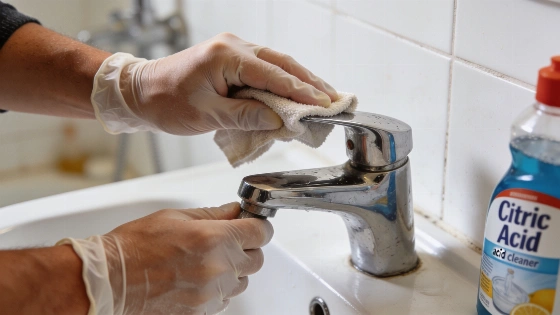
Hansgrohe’s maintenance guide highlights the risk of dulling chrome or scratching surfaces if citric acid is used incorrectly. The safest method is to apply a diluted solution with a cotton cloth, wait the specified time, then rinse and dry thoroughly. Abrasive sponges or brushes should be avoided, as even tiny scratches can make taps lose their shine and attract more dirt.
For aerators, Duravit advises removing only the parts designed to be detached and soaking them briefly in a mild cleaning solution. Rubber seals should not be immersed, as acid can degrade plastic components. Special finishes—such as lacquered or aged metals—may require alternative cleaning methods. Forcing stuck parts with tools can scratch or damage fittings, so patience and the right technique are key.
Dealing with Toilet Limescale
Geberit’s cleaning guide includes citric acid among the products that can be safely diluted for toilet bowls. Duravit allows acidic cleaners on their ceramics, even for several hours if stains are persistent. To treat vertical surfaces, some recommend applying the solution with soaked toilet paper and letting it sit before scrubbing and flushing. However, the bowl must be distinguished from the seat, lid, and cistern, as plastic parts can stain or degrade if exposed to acidic cleaners. Geberit suggests keeping cleaning cloths for the toilet separate from those used elsewhere in the bathroom, and warns that natural remedies like orange peels do not replace proper cleaning. Any treatment inside the cistern should only be done if the manufacturer’s manual allows it.
The Dangerous Mix to Avoid
Before using citric acid, it is crucial to ensure no traces of bleach or other cleaners remain. The Instituto Nacional de Seguridad y Salud en el Trabajo (INSST) warns that mixing bleach with acids releases toxic gases that can irritate eyes and airways. Bathrooms should be well ventilated, and each product must be thoroughly rinsed away before applying another. Cleaning tablets should be checked for their ingredients before adding anything else.
Citric acid is not entirely harmless. The European Chemicals Agency classifies it as capable of causing serious eye irritation and possible respiratory discomfort. Always follow label instructions, use recommended protective gear, and keep the product out of children’s reach. The powder should not be transferred to food containers or allowed to become airborne. As a preventive measure, drying taps after use can help reduce future limescale buildup.
While citric acid remains a useful tool for tackling limescale, its effectiveness depends on careful, surface-specific application and strict avoidance of dangerous chemical combinations. Following expert advice can help keep your bathroom clean without risking damage or health hazards.