Citroën’s new 2 CV electric concept ditches excess for charm and simplicity. With a €15000 target price and a featherweight build, the brand is taking direct aim at the budget EV segment.
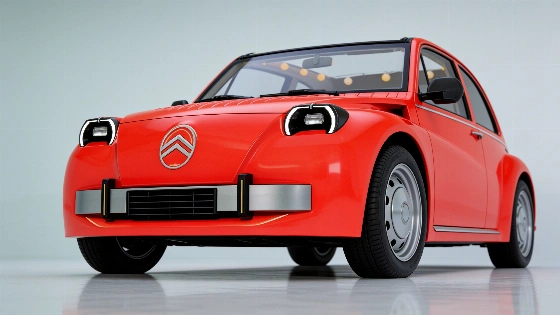
Citroën’s design studio in Paris has been buzzing with activity as the team reimagines the 2 CV for a new era. The concept car, revealed this week, wears its heritage on its sleeve. Mechanical door handles, exposed bumpers, and the classic profile all signal a deliberate break from the tech-heavy, oversized EVs crowding the market.
At 3.76 meters long and just one tonne, the 2 CV concept undercuts the lightest Renault Twingo by 200 kg. Citroën is banking on this lean approach to sidestep the battery bloat and weight creep that have become standard in the segment. The car’s ribbed bonnet, roll-up canvas roof, and missing third side window are straight callbacks to the 1948 original. L’Argus reports that while this is still a concept, Citroën is mapping out a production version for around 2028, with a clear focus on affordable city driving.
After discontinuing the C1 in 2022, Citroën had effectively exited the A-segment; the new 2 CV is designed to reclaim this niche in the European market.
Step inside and the retro streak continues. The dashboard is pared back, with a head-up display borrowed from the C3 Aircross and a speedometer that looks lifted from Citroën’s archives. The gear lever pushes forward to select a gear, just like the old days. Designers have slipped in playful touches: a turtle on the brake pedal, a hare on the accelerator, and a picnic basket that doubles as the center console. Even the “Radioën” sound system can be popped out and carried to a picnic spot.
Citroën’s engineers have not forgotten the original 2 CV’s legendary egg test—crossing a ploughed field with eggs on board, unbroken. The glovebox now includes a dedicated egg holder, a nod to the car’s rural roots. Stellantis says the concept uses flat panels, straight air intakes below the windshield, and modular bumpers to keep repairs simple and production costs down.
Technical specs remain tightly held. Citroën’s plan is to keep the car small and light, with a battery likely around 30 kWh. That should mean a real-world range near 250 km. The company has set a €15000 starting price, aiming to undercut most rivals. This figure is before any government incentives, and Citroën intends to build the car in Europe to keep costs in check.
The 2 CV concept is being developed with future European E-Car/M1E regulations in mind, which are expected to simplify the creation of compact and more affordable electric vehicles. Citroën has not yet disclosed official battery capacity, motor power, or WLTP range, so any figures circulating are unconfirmed estimates.
Citroën has long resisted the retro revival trend. Now, with the 2 CV concept, the company is charting its own course for budget EVs. Michelin is on board for the retro-styled tires and customizable steel wheels. Stellantis says the goal is not a carbon copy of the original, but a modern take on its core values: simplicity and practicality, with a price tag that opens the door for more drivers.
Chinese EVs have been shaking up the European market, forcing legacy brands to rethink their playbook. Citroën’s answer is to go lighter and simpler, not bigger or flashier. The current Citroën ë-C3, one of the cheapest electric city cars in France, starts at €20,390. The 2 CV’s €15000 target marks a sharp move toward true entry-level pricing.