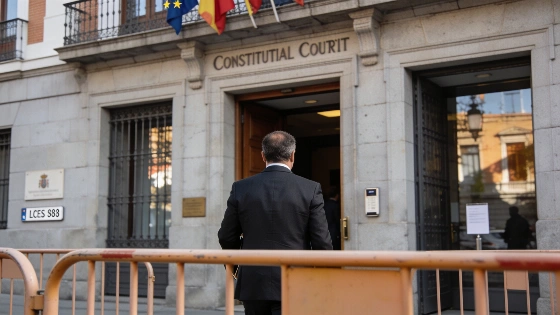
Spain's Constitutional Court has begun reviewing the first amnesty appeal involving a leader of the procés. Its ruling on Jordi Turull could decide how malversation claims are treated and affect the legal futures of Carles Puigdemont and Oriol Junqueras.
The Constitutional Court has begun reviewing Jordi Turull's appeal over Spain's amnesty law. It is the first case involving one of the leaders of the procés to reach this stage. The central question is whether the law covers malversation. The ruling is expected to set the legal direction for the other appeals.
The effects would reach beyond Turull. A ruling in his favour could bring Carles Puigdemont closer to returning to Spain. It could also allow Oriol Junqueras to seek public office again in the next Catalan elections. The decision will affect pending criminal proceedings and the political future of both figures.
The Turull case is one of at least seven related appeals involving procés figures, including Dolores Bassa, Oriol Junqueras, Raül Romeva, Toni Comín, Lluís Puig and Carles Puigdemont.
Tuesday's plenary session began at 10.30am. It may take up Turull's appeal before continuing until Thursday. The Constitutional Court could issue its final decision at the next plenary session, scheduled for 6 October. Until then, the judges are working from a draft prepared by José María Macías. Reports by EFE and Spanish national media describe the 22-24 September deliberation as the first stage in the court's review of this group of amnesty challenges.
Macías argues that the Supreme Court was right to reject amnesty for malversation. He says the Supreme Court's reading follows existing legal doctrine on the elements of the offence involving public funds. His draft would therefore keep the criminal consequences for the conduct attributed to the leaders of the procés.
The Supreme Court has so far excluded malversation from the amnesty. It says the offence falls under the law's exceptions because the politicians did not receive direct income. The court found that they allegedly gained indirectly by using public resources for the referendum held on 1 October 2017.
On 15 September, Supreme Court Judge Pablo Llarena again declined to apply the amnesty to Carles Puigdemont while awaiting clarification from the Constitutional Court on malversation. The decision underlines why the Constitutional Court's ruling is central to the next procedural steps.
That disagreement is at the centre of the Constitutional Court's first review. Turull is asking for the amnesty to cover malversation. The current draft would uphold the Supreme Court's position. The judges' decision will show whether that reading remains in place for the other appeals.
The court's progressive majority is widely expected to reject Macías's draft and appoint another magistrate to prepare a new one. That is not yet a ruling. The judges must finish their deliberations and agree on the wording of the final resolution. The next plenary session is scheduled for 6 October, which is the earliest date when the decision could become known.
The ruling could also guide Supreme Court magistrate Pablo Llarena. He is expected to apply the doctrine set by the Constitutional Court without waiting for the court to decide Puigdemont's own appeal. Puigdemont remains subject to a national arrest warrant. The amnesty decision may therefore affect the conditions around a possible return. As El País has reported, the Constitutional Court's position on malversation is being treated as the last major legal obstacle in that process.
Junqueras is serving a 13-year disqualification sentence for malversation and is currently barred from holding public office. If the Constitutional Court ultimately extends the amnesty to that offence, he could again stand as a candidate in the next Catalan elections. Those elections are scheduled for 2028 if Salvador Illa completes the legislature. One judgment could therefore change both a former president's legal position and a party leader's electoral prospects.
The case is part of a wider legal sequence that began more than two years after the amnesty law was approved. It followed the Court of Justice of the European Union's endorsement of the measure in July. Readers tracking Spanish court cases involving public funds and political influence can also look at an earlier legal case that offers a separate example of how such disputes reach the courts.
The Constitutional Court is deciding more than a symbolic dispute. It must determine whether the statutory exception for malversation covers the conduct described by the Supreme Court. It must also decide whether that interpretation survives constitutional review. Turull's appeal is the main test for the other procés cases. Whatever the final wording on 6 October, the ruling will set the legal framework for assessing Puigdemont's arrest order and Junqueras's disqualification. It will show whether the amnesty applies to malversation or remains limited by the Supreme Court's interpretation.