José Flores, born in 1907 according to Costa Rica’s civil registry, has reached 119 years. His family and researchers are working to confirm his age, which could make him the world’s oldest living person. Experts are studying his rural lifestyle and family support as possible factors.
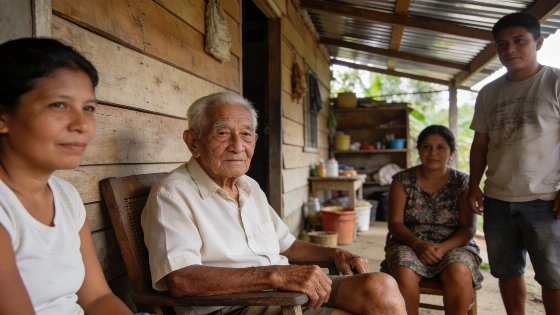
On July 11, 2026, José Flores Flores marked his 119th birthday in a modest wooden house in Obandito de Sardinal, Costa Rica. Official records from the country’s civil registry list his birth as July 11, 1907, but international validation is still pending. If confirmed, Flores would surpass all currently recognized living supercentenarians worldwide.
Flores’ case is supported by both his civil registration and a baptismal certificate from 1907, placing his origins in Guanacaste, on Costa Rica’s Pacific coast. Researchers, including gerontologist José Antonio Rabadán from the University of Alicante, have reviewed the documentation and consider it a strong basis for further investigation. The case is now under review by the Gerontology Research Group (GRG), which specializes in verifying the ages of supercentenarians. Only after a thorough check of all documents and life history will a formal application be considered for international records such as Guinness World Records.
Life Shaped by Hardship
Flores’ daily life is marked by simplicity and resilience. He lives in a wooden and tin-roofed home on land he does not own, relying on the care of his granddaughter Hellen, who is training to become a professional caregiver. Despite hearing loss and knee problems that require a walker, Flores remains active—greeting visitors with a firm handshake, playing dominoes, and enjoying traditional breakfasts of gallo pinto, fresh cheese, and fried plantain. He still steps outside to feel the breeze and listen to the local parrots.
Poverty has been a constant companion since childhood. Raised by his grandmother after his mother left and his father died, Flores began working in the fields as a boy and later moved to banana plantations in the south. He never managed to buy his own land. Even when the state considered granting him a plot at age 75, doubts about his ability to work it prevented the offer from materializing. The family currently survives on about 150,000 colones a month—roughly $330. Flores sums up his approach to life simply: “Work hard, trust in God, and eat healthy.”
Experts Seek Longevity Clues
Researchers are examining Flores’ lifestyle for clues to his extraordinary longevity. Jorge Vindas, founder of the Asociación Península de Nicoya Zona Azul, highlights the physical activity, unprocessed diet, strong family ties, community life, sunlight, and spirituality common among rural generations. Although Flores spent much of his life outside Guanacaste and only returned in 2024, his habits reflect many traits associated with the region’s famed longevity.
Rabadán cautions against attributing Flores’ age to a single factor. Genetics, nutrition, exercise, and social connections all play a role, but no single explanation suffices. Notably, Flores was still walking nearly a kilometer daily at age 113 to attend a senior center. Rabadán, who has visited over seventy centenarians in Guanacaste, describes Flores’ physical condition as exceptional. The search for answers echoes stories like that of Anna Possi, who continues to run her Italian café at 101 and credits her routine and simple lifestyle for her vitality—a story detailed here.
Potential to Reshape World Records
As of July 31, 2026, Guinness World Records recognizes Ethel Caterham of the UK, born August 21, 1909, as the oldest living person at 116. The GRG also lists her at the top of its validated rankings. Should Flores’ 1907 birth be confirmed, his 119 years would dramatically alter the global longevity charts. The all-time record remains with Jeanne Calment, who died at 122 years and 164 days. The distinction between declared and validated ages is crucial in these recognitions.
Flores’ story also highlights demographic shifts in Costa Rica, where life expectancy now stands at 83.7 years for women and 78.6 for men, with fertility rates at 1.1 children per woman. These trends are increasing the demand for family and professional elder care. Flores’ family has chosen to keep him at home, with his granddaughter, daughter, and great-grandson sharing caregiving duties—ensuring he remains at the center of family life and decision-making.