A Madrid judge has closed the case against Miguel Ángel Rodríguez for sharing the names and images of two EL PAÍS journalists. The court found no evidence of illegal data acquisition. The incident raised concerns about privacy and official conduct.
The Madrid judiciary has closed the investigation into Miguel Ángel Rodríguez, chief of staff to the regional president Isabel Díaz Ayuso, over the dissemination of personal details of two EL PAÍS journalists. The case, which centered on the release of names and images of reporters probing alleged irregularities at Ayuso’s residence, was dismissed after the court found no proof that Rodríguez obtained the information unlawfully from the president’s security team.
The judge’s decision, dated June 30, concluded that the data shared by Rodríguez did not qualify as confidential or personal under Spanish law. The ruling followed testimony from Alberto González Amador, Ayuso’s partner, who confirmed that he had provided Rodríguez with the image in question, which he himself received from a neighbor. González Amador also submitted additional photos and a neighborhood chat discussing the journalists’ presence, but said he no longer had his direct conversation with Rodríguez.
Notably, the court did not summon the security agents who identified the journalists for testimony. Rodríguez, who had previously admitted to distributing the information but denied sourcing it from Ayuso’s security detail, maintained that he recognized the reporters from their professional activities in Madrid and did not require police input to identify them.
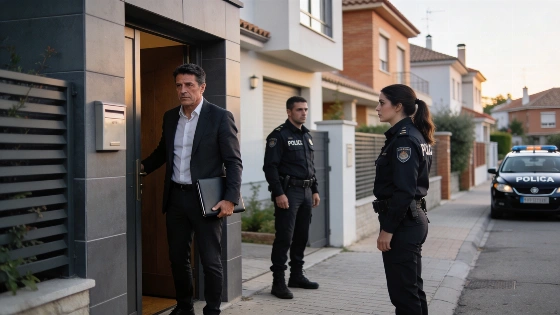
The events unfolded on March 19, 2024, when two EL PAÍS journalists visited the vicinity of Ayuso’s home to question neighbors about possible unauthorized renovations. They had discovered two municipal stop-work orders for the property. That day, a plainclothes national police officer from the president’s security team requested their IDs and press credentials, later informing colleagues of their identities. Hours later, Ayuso’s team circulated a message to various journalists, including the names and photos of the EL PAÍS reporters, and accused them of harassing neighbors and minors—a claim that was widely repeated by online outlets without independent verification.
According to Interior Ministry sources cited by EL PAÍS, the reporters’ names were passed on by the president’s security team, a point reiterated by the section chief in court. However, the head of Madrid’s security denied receiving or transmitting any such information to Rodríguez. Rodríguez himself later acknowledged distributing the details, clarifying that it was done in a personal capacity and not through any official government channel. He also stated in an interview that he had shared the journalists’ identities with 18 people.
The case originated from a complaint filed by the PSOE and joined by EL PAÍS, which was initially dismissed but later reopened by the Provincial Court—though only against Rodríguez, not the police officers involved. The investigation remained focused on whether Rodríguez’s actions constituted a breach of secrecy laws, but the judge ultimately found no evidence of illicit data acquisition or the sharing of protected personal information.
The controversy over leaks of sensitive information has been a recurring issue in Spain, as seen in other high-profile cases such as the exposure of private agendas and messages involving political figures. For example, a recent incident involving the leak of José Luis Rodríguez Zapatero’s confidential data reignited debate over privacy protections, as detailed in this related report.
Meanwhile, the original investigation by the journalists revealed that, despite municipal orders to halt construction, the renovations at Ayuso’s property were completed. González Amador avoided penalties due to a procedural loophole: after notifying the city of demolition work in August 2022, he later submitted a second document, which the city responded to with a repeated stop-work order. This duplication allowed him to overturn the sanction in court, and the city government did not appeal. By November 2025, González Amador had acquired the penthouse above the renovated apartment, which he had previously rented for €5,000 per month. The lower apartment, subject to the journalists’ investigation, was purchased by González Amador after he was implicated in an alleged €350,000 tax fraud.
This case highlights ongoing tensions between political offices, the press, and privacy laws in Spain. The outcome underscores the challenges in prosecuting data leaks when the information in question is not deemed confidential under current legal standards. It also reflects broader debates about the boundaries of official conduct and the protection of journalists investigating matters of public interest.