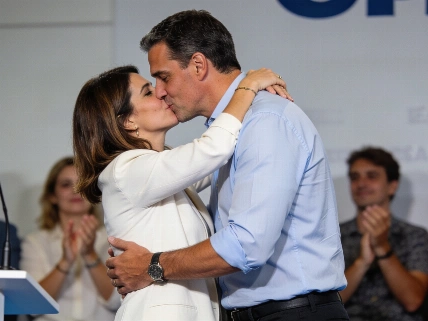
A Madrid judge has opened a criminal trial against Begoña Gómez, wife of the Prime Minister. Her passport has been withdrawn and she is barred from leaving Spain. The decision follows demands from far-right groups and marks a rare step in Spanish democracy.
Begoña Gómez, wife of Spain's Prime Minister, now faces a criminal trial after Judge Juan Carlos Peinado ordered her passport withdrawn and banned her from leaving the country. The decision, announced Saturday, follows repeated requests from far-right groups acting as popular prosecutors, including Hazte Oír and Vox. This measure, rarely seen in Spain's recent democratic history, comes amid ongoing controversy surrounding the case.
The court's move marks a significant escalation in the legal proceedings that began in 2024. Judge Peinado had previously rejected similar requests to restrict Gómez's movements, notably ahead of her planned trip to the G-20 summit in Brazil. At that time, he argued that such restrictions were unnecessary and disproportionate, noting the investigation was still in its early stages and that Gómez's personal circumstances made long-term residence abroad unlikely.
This week, after another formal request from the popular prosecution, the government publicly opposed the travel ban. Government spokesperson Elma Saiz described the measure as unjustified, highlighting that Gómez is under constant police protection and resides in the highly secured La Moncloa complex.
Judge Peinado attributes four criminal offenses to Begoña Gómez: influence peddling, business corruption, embezzlement, and misappropriation. The investigation centers on allegations that Gómez leveraged her relationship with the Prime Minister to advance her professional interests and relied on her advisor for private work. In a previous court resolution, Peinado compared the alleged scheme to corruption not seen since the era of Fernando VII, suggesting that such conduct is more typical of absolute monarchies than modern Spain.
The case has drawn attention for its political implications and the involvement of groups from the far-right spectrum. The use of popular prosecution, a legal mechanism allowing private groups to participate in criminal cases, has been a point of contention in Spanish legal and political debates. While the trial's outcome remains uncertain, the restrictions imposed on Gómez set a notable precedent for high-profile legal actions involving government figures' families.
In Spain, the withdrawal of a passport and a ban on leaving the country are exceptional measures, typically reserved for cases where there is a clear risk of flight or obstruction of justice. The involvement of popular prosecution groups, such as Hazte Oír and Vox, reflects a broader trend of politicized legal actions in recent years. The case against Begoña Gómez is unfolding at a time when judicial decisions involving political figures are under intense public scrutiny, highlighting ongoing tensions between the judiciary and the executive branch.