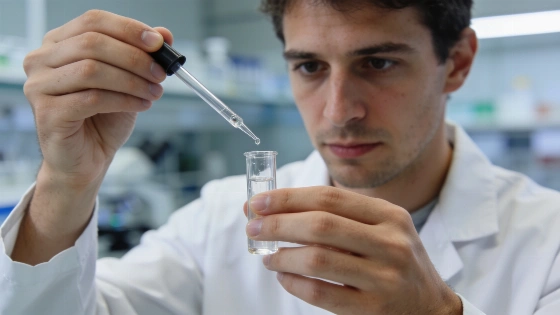
Spanish researchers corrected a faulty DNA reading signal in human cells. The change restored part of an enzyme needed for metabolism, though a possible treatment is still years away.
A gene-editing technique restored part of a missing enzyme in human cells linked to propionic acidemia. Researchers at the Centro de Biología Molecular Severo Ochoa carried out the work. The centre is run jointly by the CSIC and the Universidad Autónoma de Madrid.
This is an early laboratory result, not a treatment for patients. It targets the molecular defect behind some cases of a rare and potentially fatal disease.
The team used CRISPR-Cas12a to switch off the genetic signal behind a hidden error in the PCCA gene. Once that signal was blocked, the cells processed their genetic instructions more accurately. They then began producing part of the affected enzyme again. The findings were published in Molecular Therapy: Nucleic Acids.
Propionic acidemia is a lifelong metabolic condition: authoritative NIH and GeneReviews-style references emphasize early diagnosis and continuing control of metabolic decompensations, even when symptoms are managed after infancy.
Propionic acidemia usually appears in the first days or months of life because the metabolic defect is present from birth. Severe metabolic crises can occur during childhood. Neurological, cardiac and pancreatic complications may develop during adolescence or adulthood. There is currently no cure.
The study focused on PCCA. This gene carries instructions for one of the two components of propionyl-CoA carboxylase. The enzyme helps the body process certain parts of dietary proteins and fats. When it fails, toxic substances build up and can damage organs including the brain, pancreas and heart.
The approach may have relevance beyond this particular case of propionic acidemia. Because it corrects a faulty splicing signal rather than replacing the whole gene, it could inform future strategies for other rare disorders caused by similar splicing defects.
The mutation does not simply remove part of the gene. It disrupts the step in which DNA information is copied into RNA, the intermediary used to make proteins. A fragment that should remain inactive is mistakenly included in the RNA. That distorts the message sent to the cell and stops normal enzyme production.
This explains why the researchers targeted the faulty reading signal instead of replacing the whole gene. They tested several CRISPR-Cas12a strategies in laboratory cell models. The most effective one switched off the signal that caused the cell to treat the inactive sequence as valid. Normal processing then resumed in part, and activity of the affected enzyme increased.
The result matters because it targets the source of the defect inside the genetic instructions. It may also offer an advantage over approaches that need repeated administrations to maintain their effect. A permanent correction is still only a possibility. The experiment took place in cells and did not establish safety or effectiveness in people.
The limits are substantial. The strategy must be tested in animal models. Researchers also need a safe and efficient way to deliver it to the organs affected by the disease. The work is therefore at the proof-of-concept stage, not in clinical care. Reporting on the study makes clear that there are no confirmed data on in vivo safety, clinical efficacy or tissue delivery.
The wider scientific record shows why access to research matters. Earlier fossil reporting raised the same issue in another field. Here, the practical result is direct: cells regained part of a protein they had been unable to make correctly.
Lourdes Desviat and her team have not produced a cure. They have shown that a concealed DNA error can be redirected precisely in human cells. That is a concrete step toward possible future therapies for propionic acidemia and other disorders caused by similar defects. NIH and related clinical reference resources also reinforce the medical context. Early recognition and careful management remain essential for people living with this severe inherited metabolic disease.