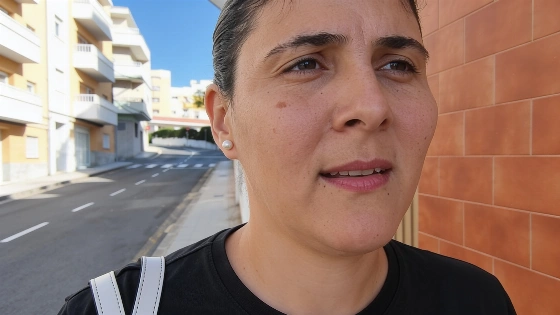
Ismaray left medicine in Cuba for a new life in Spain. Now she waits tables, caught between strict work rules and a system that keeps her medical skills on ice.
Ismaray used to treat patients in Cuba’s public hospitals. Now she spends her days on her feet in a Spanish restaurant. Her pay is fixed at 1,400 euros a month. It doesn’t matter if the place is packed or empty. The shift from doctor to waitress is more than a change of job. It’s a hard stop. Her medical training sits unused while she faces a new set of rules.
She’s not alone. The Instituto Nacional de Estadística reports over 287,000 Cubans living in Spain. Many have university degrees. Most can’t work in their fields. For Ismaray, the strictness of her new job stands out. In Cuba, she could step out during her shift to handle personal matters. In Spain, she must stay on the floor. Her phone stays hidden unless it’s a real emergency or for work. “That’s a shock, because Cubans are used to always having their phone,” she says on her YouTube channel, La Tribu Pérez.
Recent analyses indicate that over 600,000 Cubans applied for Spanish citizenship between 2022 and 2025 under the law for descendants of Spaniards, suggesting the Cuban community in Spain may be significantly larger than official figures show.
Her routine is punishing. She works split shifts. The commute takes an hour each way. That’s four hours lost every day just getting to and from work. The job is rigid and physically tough. Her medical degree means nothing here until Spanish authorities recognize it. The process, called homologation, drags on for months or even years. Many skilled migrants end up in hospitality, retail, or customer service while they wait. There’s no shortcut.
Ismaray’s story is part of a bigger trend. Spain’s hospitality sector leans heavily on foreign workers. Women fill 55.1% of these jobs, with 977,000 working in hospitality. Foreign nationals or dual citizens now hold 723,000 out of 1.77 million jobs in the sector. That’s more than 40%. Most work as waiters, cooks, or in basic service roles. The sector keeps growing. In the first quarter of 2026, it added 70,000 new jobs. But these jobs rarely lead to careers for people with higher education. The ladder stops at the ground floor.
According to recent labor market studies, Spain now employs approximately 3.55 million foreign workers, with foreigners making up nearly 33% of the hospitality workforce. This reliance on migrant labor is at a historic high, especially as the country faces ongoing demographic challenges.
Most contracts are permanent. Over 87% are indefinite. But for Ismaray, the work is a world away from medicine. She sent out CV after CV. She applied for jobs in her field. No luck. Restaurants hired her for her speed and willingness to learn, not her degree. “Emigrating also means leaving behind a life, a profession, your family, your customs, and learning to start again,” she says. The words are blunt. The reality is tougher.
Spain’s hospitality industry is changing. Automation and new tech are coming. For now, though, the sector runs on people. It needs workers who can adapt and stay present. Bureaucratic barriers keep skilled migrants out of their professions. Talent goes unused. Every day, thousands like Ismaray start over from scratch.
Spain keeps pulling foreign workers into its hardest jobs. The country faces a choice. It can speed up the recognition of foreign qualifications. Or it can keep skilled people on the sidelines. The current system leaves professionals like Ismaray in limbo. Their skills gather dust. Their ambitions wait. Until these barriers fall, stories like hers will keep repeating in Spain’s economy. The silence is telling.