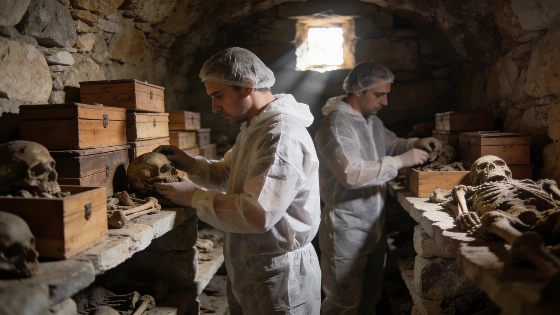
More than half of exhumation requests at Cuelgamuros come from families of Francoist soldiers, challenging assumptions about Spain’s Civil War memory. A small forensic team works under pressure to identify remains amid delays and controversy.
Inside the crypts at Cuelgamuros, the story is not what most people expect. The forensic team working there is not just searching for Republican victims. Over half of the 214 exhumation requests come from families of Francoist soldiers. Some of these soldiers volunteered. Others were conscripted. Their relatives want to bring them home, away from the monument’s shadow. That changes the picture.
The documentary 'Cuelgamuros, entre lo difícil y lo imposible' lays this bare. Spain’s struggle with its past is more tangled than many admit. Francisco Etxeberria, a well-known forensic doctor, leads the team. Archaeologist Lourdes Herrasti is by his side. They work in a maze of 28 crypts. More than 33,800 remains are stored there. Their job is to find and identify the people whose families have asked for exhumation. Records are patchy. Memories fade. The task is tough.
According to RTVE, until 2023, the process of exhumations at Cuelgamuros had not been officially launched, with authorities only recently granting permissions for family requests.
Progress is slow. The forensic specialists do not get extra pay. Many volunteer their time. They face physical obstacles in the crypts and a wall of bureaucracy. DNA testing is key, but the National Institute of Toxicology and Forensic Sciences has caused delays. The team has had to use private labs. Every step drags. Each identification is a small win against official inertia.
Work inside the crypts is careful and exact. Elisa Cabrerizo keeps the official registry. René Pacheco tries to make sense of the labels on the boxes. Anthropologist Inmaculada Alemán uses her skills to identify remains. Many bones are still unnamed. The original censo, which should list names and burial spots, is unreliable. The job is part science, part detective work.
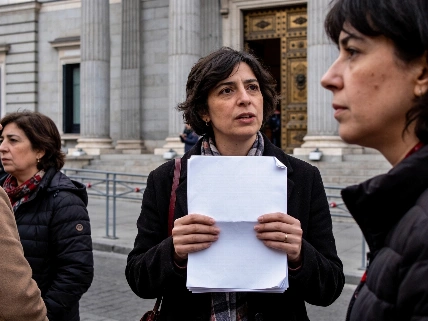
Critics are everywhere. Some groups say the team is too slow. Others call the exhumations a desecration. The forensic experts push back. They say their work is about dignity. Families deserve to know where their loved ones are. For many, this is the last step in a fight for closure that has lasted decades. The stakes are personal. The pain is real.
Public materials and comments from the documentary's authors emphasize that the majority of requests are not limited to Republican victims—over half concern Francoist military personnel, both volunteers and conscripts. This challenges the simplified narrative often associated with Cuelgamuros and highlights the mixed reality of Civil War casualties.
The team keeps going. Their work is not just about bones or DNA. It is about changing the story of Cuelgamuros, now officially renamed from the Valley of the Fallen. The old idea of victims and victors does not fit. The documentary shows this clearly. Spain’s wounds from the Civil War are still open. The search for truth is hard. It is not over.
As the forensic team works, Spain’s wider debate over memory comes into view. The fight to identify and return the dead echoes in other national arguments. Recent reports on public commemorations and historical recognition show this. Every exhumation at Cuelgamuros is proof that the past is not buried. Families want answers. They will not give up.
Cuelgamuros does not fit easy stories. The fact that so many Francoist families want exhumation changes how people see the Valley. It forces a deeper look at Spain’s Civil War legacy. The forensic team faces technical, bureaucratic, and social resistance. Still, they persist. That matters. In the end, their work is not about revenge. It is about giving families—on all sides—a peace they have waited generations to find.