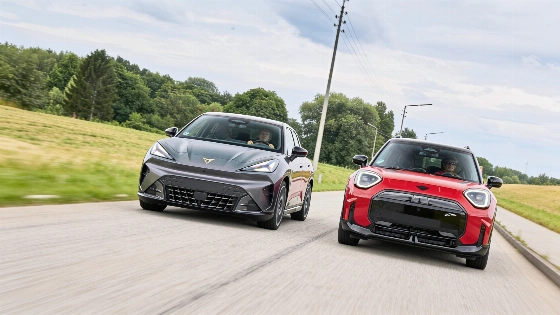
The Cupra Raval Endurance pulls ahead of the Mini Aceman SE in road performance and battery range. Both cars offer over 200 horsepower and similar compact footprints, but the Cupra reaches 130 km/h faster and stops in a shorter distance. It also covers more ground on a single charge. For Spanish buyers considering electric hatchbacks, it sets a new standard at this price.
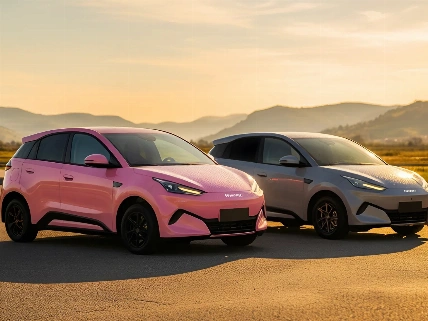
Visually, the Raval looks sharper and more aggressive, while the Aceman has a longer, glassier profile. On paper, the Mini is only three centimeters longer and a bit narrower. Both share nearly the same height and wheelbase, so cabin space is close. The Raval’s rear seats are tighter for tall passengers, but the Mini’s back bench isn’t exactly roomy either: fine for short trips, less so for long ones.
Cupra officially opened the Raval configurator on April 9, 2026. The Endurance version features a 155 kW (211 PS) motor and a 52 kWh net battery.
Inside, the Raval has a modern look, with two large screens and very few physical buttons. The finish feels solid. The Mini keeps its trademark round touchscreen in the center but skips a separate driver display. It does have more physical controls, which some drivers might prefer. The Cupra wins on cargo space: 441 liters in the boot, expandable to 1,240 liters, compared with the Mini’s 300 to 1,005 liters. Towing also favors the Raval, at 1,200 kg versus 750 kg for the Mini.
On the road, the differences grow. The Raval’s 211 CV and the Aceman’s 218 CV look close on paper, but in practice, the Cupra accelerates faster up to 130 km/h. The Mini only catches up at higher speeds; the comparison lists its top speed at 170 km/h, against 160 km/h for the Cupra. Braking tests show the Raval stopping from 100 km/h in 34 meters with cold brakes. The Mini needs at least 35.6 meters and loses more ground as the brakes heat up.
Steering and handling also favor the Cupra. Its steering feels more direct and gives better feedback, while the car stays balanced and playful through corners. The Mini, heavier by 227 kg, tends to understeer and doesn’t deliver the classic go-kart feel the brand is known for. Even with its "kart mode," the Aceman can’t match the Raval’s driving engagement.
Official specifications list a WLTP range of up to 445 km and a maximum speed of 175 km/h for the Raval Endurance. The Mini Aceman SE is listed with a range of about 395 km and a top speed of 170 km/h. Both cars belong to the same compact EV segment. The Raval has a larger boot and faster DC charging, up to 105 kW, with a 10 to 80% charge in 24 minutes.
Neither car is built for maximum comfort, but both are reasonable for daily use. The Raval’s firm suspension means you feel more of the road, though it suits the car’s sporty character and isn’t harsh on good pavement. The Aceman rides softer but can feel a bit floaty over bumps, especially at speed.
Efficiency is another area where the Cupra leads. In mixed driving, it used 13.7 kWh/100 km, giving a real-world range of 403 kilometers. The heavier Mini needed 18.1 kWh/100 km and managed only 321 kilometers before needing a recharge. The Raval also charges faster: 10 to 80 percent in 24 minutes at up to 105 kW. The Mini takes 31 minutes at a lower peak of 95 kW.
Price is another advantage for the Cupra Raval Endurance. Both cars are pitched as affordable entries into the electric market, but the Raval costs less and offers more practicality. For Spanish buyers looking for value and a good driving experience, it’s the more sensible pick.
The Raval’s launch shows how quickly the compact EV segment is changing. Other brands are moving fast too, as seen in recent releases, but Cupra stands out for its sportiness and usability at this price.