Dacia has put plans for a third compact model on hold, shifting its attention and resources to electric vehicle development. The move marks a clear change in direction as the brand chooses electrification over expanding its petrol SUV lineup.
Dacia has stopped work on its planned third compact model, signaling a clear change in priorities. Instead of adding another petrol-powered SUV, the Romanian automaker is now focusing on electric vehicles, with plans to launch four new EVs before 2030.
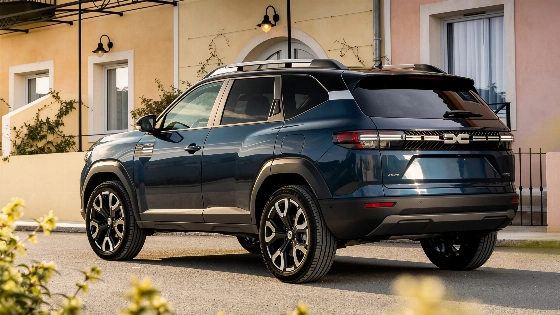
This shift comes as Dacia’s position in the European C-segment is stronger than ever. The Dacia Bigster, launched in 2024, quickly became the best-selling C-segment SUV in Europe during the second half of last year. Its sibling, the Dacia Striker, followed with a longer, more aerodynamic body, aimed at families looking for a different kind of crossover. Together, these models have helped Dacia secure a solid share in one of Europe’s most competitive markets.
According to the European Automobile Manufacturers Association, Dacia's market share in Europe rose to over 4% in 2023, marking its highest level in the brand's history.
Despite this momentum, Dacia’s leadership has decided to halt the rollout of a third compact model that was originally planned for next year. CEO Katrin Adt explained: “We have a very successful entry with the Bigster, we see the potential of the Striker and currently we have no other plans.” She said the company is now focused on the next generation of the Dacia Sandero and other electrification projects, leaving no room for another mid-size petrol SUV in the near future.
The reason isn’t competition between the Bigster and Striker, but the high cost of developing both combustion and electric models at the same time. Even with support from Renault Group, Dacia can’t spread its engineering and financial resources across so many projects. The push for electrification means making tough choices, and for now, the third C-segment model is on hold.
Industry analysts at JATO Dynamics note that the European market for electric vehicles grew by 14% in 2023, with affordable EVs like the Dacia Spring playing a key role in attracting new buyers. This trend is expected to accelerate as EU emissions regulations tighten further by 2025, increasing pressure on automakers to expand their electric offerings.
There was speculation about what this third model might have been. Some insiders suggested a sleeker version of the Bigster to compete with the Peugeot 3008, while others pointed to a lower Striker variant aimed at the Skoda Octavia. With the project now shelved, these ideas remain just concepts.
Instead, Dacia’s next major launch will be the new generation Sandero, which will come in both petrol and electric versions. The petrol Sandero is expected to keep the CMF-B platform from the Renault Clio, while the electric version will use the RG-EV architecture shared with the Renault 5 E-Tech. The second-generation Dacia Spring, once the cheapest electric car on the market, is also in the works as part of the brand’s four-EV plan.
For Dacia, the move toward electrification is not only a response to regulations but also a bet on where the European market is heading. The company expects C-segment SUVs to make up a third of its sales by 2030, but future growth will depend on affordable electric options rather than adding more petrol models. This reflects the choices facing other automakers, as seen in the Seat brand’s recent situation during Volkswagen’s own electric transition.
Dacia’s decision to pause its third compact model is a practical response to industry realities. The brand is choosing to build on its SUV success and put its efforts into electrification, rather than risk spreading itself too thin. In a market where resources are limited and change is constant, this focus could be what keeps Dacia ahead.