US Tests Wireless Power Transmission: Laser Replaces Copper Wires. American engineers have transmitted more than 800 watts of electricity over 8.6 km for the first time using an infrared laser. The technology is still far from wide adoption, but it could change approaches to power supply in hard-to-reach areas and in disaster recovery.
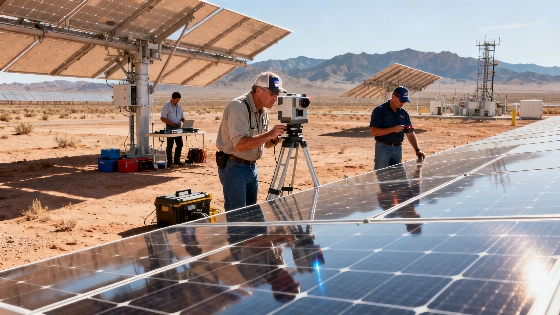
In the New Mexico desert at the White Sands testing range, an experiment was conducted that could change the way we think about energy transmission. The U.S. agency DARPA successfully delivered more than 800 watts of power over a distance of 8.6 kilometers—not through wires, but using an infrared laser. This amount of power is enough to operate a standard microwave oven, and it's the first case of such a large-scale wireless electricity transfer in real-world conditions.
The essence of the technology is simple in concept but complex in implementation: energy is converted into a laser beam, which is aimed at a mirror and then directed onto solar receiver cells. These cells convert the light back into electricity. The entire system operates without the familiar copper cables that have been the foundation of power grids for decades.
How laser power transmission works
In the DARPA experiment, an infrared laser— invisible to the eye but capable of carrying large amounts of energy—was used. The beam was directed at a special mirror, which corrected its trajectory, and then onto receiver solar panels. This approach allows electricity to be delivered to places where laying cables is impossible or prohibitively expensive.
Where this technology could be useful
According to DARPA, the technology is primarily intended for military and emergency situations: supplying power to field bases, remote areas, and disaster zones. In such conditions, traditional power grids are often useless, and fuel delivery is complicated and dangerous. The ability to quickly deploy a wireless power line could become critically important.
At this stage, the technology is still in early development. Widespread adoption will require further improvement, increased efficiency, and enhanced safety. However, the very fact that hundreds of watts were successfully transmitted over several kilometers is a significant step for the entire energy sector.
Potential and limitations
The experiment does not mean copper wires will disappear from homes in the coming years. But it does open up new scenarios: temporary power supply in hard-to-reach places, backup lines for critical infrastructure, rapid response during emergencies. Essentially, this is about creating an "energy internet," where electricity can be directed wherever it is needed, without complicated logistics.
Interestingly, similar experiments with energy conversion have already been carried out in other fields. For example, a recent American student invented a device that turns plastic waste into fuel — more about this can be found in the article about new waste recycling methods.
While wireless power transmission remains a technology of the future, DARPA experiments show that scenarios which recently seemed like science fiction are gradually becoming reality.