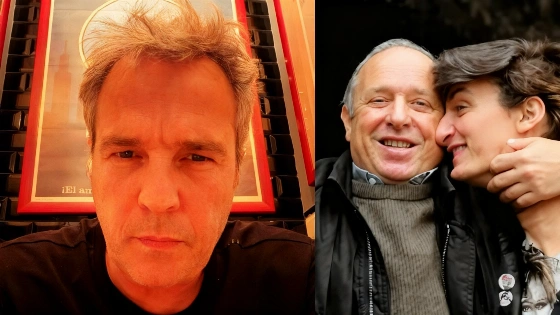
David Summers' Childhood: How the Future Hombres G Leader Grew Up Amid Chaos and Creativity. David Summers was raised among masters of humor and creative freedom. His school-time "detachment" and summer vacations in Lepe were the beginning of a great story. These very details are now discussed by Hombres G fans.
David Summers is a figure one cannot imagine outside the Spanish music scene. Yet behind the image of the charismatic Hombres G frontman lies a childhood story where chaos and creativity were so closely intertwined they became his personal code. It was precisely the atmosphere of constant movement, creative encounters, and rare yet vivid family moments that shaped the Summers remembered today as a symbol of an era.
A Creative Environment and Family Traditions
Born in Madrid, David found himself at the very heart of the capital's intellectual life. His father, Manuel Summers, was already an acclaimed director and cartoonist, and the family home resembled an exclusive club: it hosted the best humorists and artists of the time. According to Divinity, guests included names like Tip, Coll, Chumy Chúmez, and Gila — each of whom left their mark on Spanish culture. In this environment, David learned from a young age to see the extraordinary in the ordinary, and although his father was rarely home, he always knew how to turn shared time into a celebration. Games, creative tasks, and small prizes for originality became more than entertainment for the Summers children—they were a true school of creativity.
Music Instead of Drawings
A family record collection and constant conversations about creativity left their mark: David dreamed of becoming an artist like his father, but everything changed one day after he randomly listened to a The Beatles album. That very moment became a turning point for him—music replaced drawing, and the desire to be “like them” turned into an obsession. According to Summers himself, that was when he realized he wanted to devote his life to the stage.
School years: “absence” and new acquaintances
Despite the creative atmosphere at home, David was far from a star student. His time at the Menesianos religious college was remembered more as a series of lessons where he was present in body, but his mind was elsewhere—in the world of music and drawing. He himself admitted to being a “disaster” as a student, although he never caused any trouble for teachers. It was at Menesianos that he met Javi Molina, the future drummer of Hombres G. After failing his exams and transferring to another school—Santa Cristina—David’s circle expanded to include more musicians, some of whom would also later become well-known. It was here that Summers formed his first band, Los Residuos, marking the beginning of his stage career.
Summer in Lepe: family roots and a different life
Outside of school, David's life was just as eventful. Every summer, the family went to Lepe, where his father had built a house on the coast of La Antilla. In the 1960s, this corner of Andalusia was only just beginning to turn into a resort, and the atmosphere there was completely different—free, almost rural. It was here, according to Summers' memories, that he felt truly happy: the sea, the sun, simple pleasures, and his mother, who became his main moral compass. His father taught him to be an artist, but his mother taught him to be a person, and this balance became decisive for David.
Family stories and cultural context
The story of Summers is not the only example of how the atmosphere at home and chance encounters can change a destiny. The Spanish gossip columns contain many cases where family traditions or unexpected episodes from the past spark public discussion. For example, the unexpected five euro incident between Esperanza Aguirre and José Luis Martínez-Almeida is still discussed in high society circles, reminding us that details from the past often become part of a larger story.
Today, David Summers is not just a musician, but a symbol of a generation for whom a childhood filled with freedom and creativity became the main asset. His journey is proof that even 'absence' in the classroom can turn into true presence on the stage of life.