Two Spanish soldiers were hospitalised after violent attacks in Ceuta. Defence Minister Margarita Robles made an unplanned visit amid a media storm over alleged military aggression. Military associations demand stronger protection for troops.
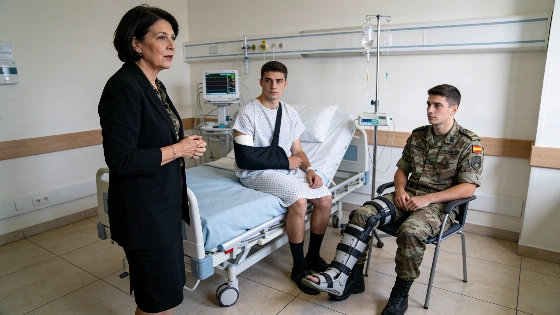
Two Spanish soldiers evacuated from Ceuta with serious injuries found themselves at the center of a political and media dispute this week. Defence Minister Margarita Robles made an unplanned visit to Gómez Ulla hospital in Madrid, just as government-aligned media accused the military of assaulting migrants. The timing of her visit drew attention, coming as debate intensified over the conduct and safety of Spanish troops stationed at the border.
Robles’ hospital visit was not listed on her official schedule. One soldier had a dislocated shoulder, the other a serious knee injury. Both were reportedly attacked by groups of migrants during recent incidents in Ceuta. Around the same time, TVE’s Malas Lenguas program aired footage and claims of harsh treatment of migrants, including minors, by Spanish soldiers. According to statements from the Ministry of Defence and several major Spanish media outlets, the two soldiers were evacuated to Gómez Ulla hospital after incidents on 9 and 12 September 2026, not on the day of the minister's visit.
One of the injured soldiers underwent surgery for a fractured fibula, as confirmed by several independent media reports.
While broadcasts focused on images of injured migrants, they largely ignored the frequent assaults faced by military personnel. Military sources say soldiers in Ceuta deal with daily insults, spitting, shoving, and sometimes coordinated attacks. In late August, twelve migrants were detained after throwing stones at a military vehicle carrying four soldiers, causing injuries and hospitalisation. Another patrol was targeted soon after, and on 9 September, a legionnaire was attacked with pepper spray. Outlets such as Euronews and La Voz de Galicia have confirmed these details and clarified that the injuries leading to hospitalisation happened earlier in September.
Military associations have repeatedly asked the government to allow proportional use of force, saying troops feel exposed and unprotected. The government has so far rejected these requests, even as reports of violence against soldiers continue. The latest incidents have renewed calls to review current protocols and raised questions about how to balance border enforcement with humanitarian responsibilities. According to RTVE, the Ministry of Defence has stated there is no evidence supporting claims of soldiers beating migrants, while confirming the hospitalisation of the two servicemen.
Government sources, cited by the same media outlets, announced plans to investigate the allegations of beatings. Throughout the day, TVE provided live updates from Moncloa and hosted panel discussions, keeping the issue in the national spotlight. Meanwhile, representatives of the military say the daily reality for soldiers is one of growing risk and limited support.
Independent media have emphasized that the hospitalisation of the two soldiers was due to incidents on 9 and 12 September, not new attacks, and that the Defence Minister's visit was confirmed by multiple sources, including the Ministry itself.
La Voz de Galicia
As previously reported, Ceuta has seen a rise in violent incidents targeting Spanish military patrols, leading to operational changes and tighter security. The current controversy highlights the ongoing tension at Spain’s North African border, where soldiers are expected to maintain order amid complex migration flows and political scrutiny.
The government’s refusal to change rules of engagement, despite repeated appeals from military associations, suggests a reluctance to shift policy under media pressure. Robles’ brief, unannounced hospital visit appears intended to draw attention to the risks faced by soldiers, not just the accusations against the military. The episode shows the difficult position of Spanish troops in Ceuta, caught between rising violence and a contentious public debate over their role. With no clear government action to address both the safety of soldiers and the treatment of migrants, the situation remains unresolved and uncertain for those on the ground.