A key witness in the Catarroja flood case told the judge the Es-Alert reached phones when water was already three meters high. The timing of the alert is now central to the investigation into the deadly October 2024 disaster.
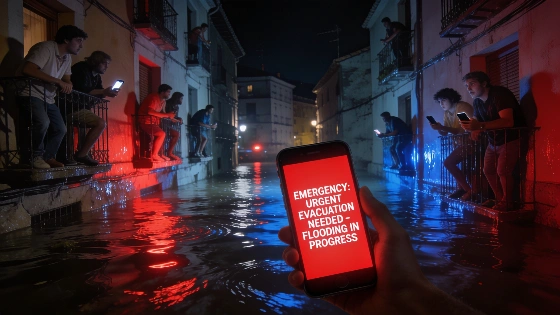
The investigation into the catastrophic flood in Catarroja, Valencia, has intensified after a witness revealed that the Es-Alert emergency notification was sent when the situation had already become critical. According to testimony given before Judge Nuria Ruiz Tobarra, the mass alert from the Generalitat Valenciana reached residents’ phones only after floodwaters had risen to three meters, leaving little chance for effective evacuation.
The witness, a camera operator from the public broadcaster À Punt, described arriving in Catarroja on October 29, 2024, as the town faced the worst of the disaster. She and her colleague entered the municipality at 18:30, just as the Poyo ravine overflowed. Forced to seek refuge on a second-floor balcony, they remained trapped until the following morning, unable to escape due to the force of the water and vehicles blocking exits. The operator recounted losing their car and being aware that many people were stranded on the roads.
Her account, as reported by EL PAÍS, highlights that the Es-Alert notification was received only when the flood had already reached a life-threatening stage. The next day, amid widespread devastation, the operator and her journalist colleague managed to leave Catarroja by stopping a passing car. She noted that they had prepared for heavy rain days in advance, carrying rain gear in their vehicle—a detail that contrasts with the Generalitat’s position that authorities were not warned in time by agencies such as Aemet or the Confederación Hidrográfica del Júcar.
The journalist who accompanied the operator also testified, stating that by 16:00 on the day of the flood, it was clear to the weather team that the Poyo ravine and others would overflow. He described the unprecedented rainfall and the concern among television staff, though he did not elaborate further.
The delayed dispatch of the Es-Alert has become the focal point of the judicial inquiry, ongoing for 19 months. Judge Ruiz Tobarra maintains that an earlier warning could have reduced the death toll, which reached 25 in Catarroja. She also criticized the content of the alert, noting it failed to instruct residents to move to higher floors—a critical omission, as 70% of victims died in garages and ground-level areas.
Records show the Es-Alert was sent at 20:11, by which time most of those reported missing had already died. The investigation continues to examine the actions of former Justice and Interior Minister Salomé Pradas and ex-Emergency Director Emilio Argüeso, both under scrutiny for their roles during the disaster.
Floods remain one of Spain’s most severe natural hazards, particularly in Mediterranean regions like Valencia, where sudden torrential rains can overwhelm drainage systems and riverbeds. The Es-Alert system, designed to provide rapid mass notifications, was introduced to improve public safety during emergencies. However, the Catarroja case has exposed critical challenges in the timing and content of such alerts. The outcome of this investigation may influence future protocols for emergency communication and disaster response across Spain.