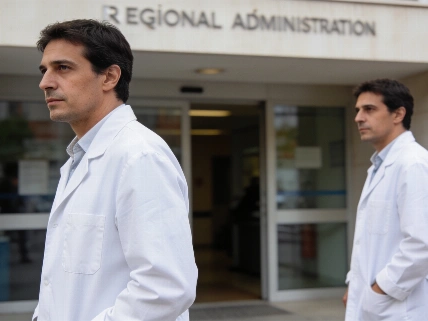
Doctors’ unions have dropped a planned nationwide stoppage but are continuing with strikes in five autonomous communities. The regions represent more than 32 million people, with further walkouts scheduled from 28 October.
The call for elections caused the pending Estatuto Marco legislation to lapse, ending the route through which doctors’ unions had pursued their demands for months. Health Minister Mónica García promoted the draft structure, but it did not reach enactment before the Cortes Generales was dissolved. Unions have shifted pressure to regional health departments, which remain responsible for many of the claims now being pursued, including local staffing, schedules and pay supplements.
The walkouts affect communities with more than 32 million residents, or 64% of Spain’s population. Strikes began in the Canary Islands on 16 October and are scheduled to run through 26 October. Madrid, Catalonia and the Valencian Community are due to join on 28 October; Andalucía’s action is scheduled to begin on 13 November.
The basic dispute is over compulsory on-call shifts, their length and compensation. Unions want them reduced or abolished and better paid, alongside action on workloads and staffing. The demands are broadly shared, but each region has its own timetable and detailed proposals. In the Canary Islands, unions have also called for an end to 24-hour shifts, a maximum of four in-person shifts a month and basic-care agendas capped at 25 routine appointments plus five urgent cases.
In the Canary Islands, the Sindicato Médico Canario and Sindicato de Empleados Médicos de Canarias (SEMCA) called the stoppages over pay, staffing and work organization within the regional health service. On 19 October, the third day of the action, the Servicio Canario de la Salud reported that 370 of 3,888 affected professionals had joined the strike, or 9.52%; Gran Canaria recorded the highest official participation, at 18.23%. The strike was reported to affect about 8,000 public-sector doctors across the archipelago. The unions put participation at 60%. On 21 October, the Canary Islands Health Ministry counted 311 strikers among 4,023 affected workers, or 7.7%, while unions put participation at 56%. The ministry said 1,326 staff covered legally mandated minimum services and reported no large disruption that day. Gran Canaria recorded 230 strikers out of 1,574 affected professionals (14.61%), and Tenerife 65 out of 1,934 (3.36%); no strikers were recorded in La Gomera or El Hierro. The unions also sought a separate negotiating channel for doctors and medical specialists and rejected a salary offer from the Consejería de Sanidad as insufficient.
The union seeks an end to 24-hour on-call shifts, a limit of four in-person shifts a month and higher pay. It also wants staffing increases and a cap of 25 daily basic-care appointments, with room for five urgent cases. Its other demands include restored extra payments, improved career supplements and additional pay for hard-to-staff posts affected by island geography.
Metges de Catalunya has called an indefinite strike from 28 October, arguing that most of its demands can be negotiated with the Catalan Department of Health despite the stalled national legislation. Its 12-point programme includes a distinct professional group and salary structure, a gradual limit of 12 working hours a day and earlier retirement. The union also seeks basic-care schedules capped at 25 appointments, protected time for training, teaching and research, and higher rates for additional work and on-call shifts.
In the Valencian Community, AVANZA also plans an indefinite strike from 28 October. It wants compulsory on-call shifts limited to three a month, with pay raised by 50%, and shifts capped at 12 hours. The union is also seeking more staff and less crowded basic-care schedules.
Madrid’s strike committee, led by AMYTS, has called four blocks of stoppages: 28 to 31 October, 4 to 7 November, 18 to 21 November and 9 to 12 December. Doctors are seeking a new career-progression system, recognition of the responsibilities specific to medical work and better pay for on-call shifts, with guarantees that supplementary hours are voluntary and properly regulated.
The Sindicato Médico Andaluz has scheduled three uninterrupted weeks of 24-hour stoppages from 13 November to 4 December. Its demands include paying an on-call hour at the ordinary hourly rate and ending compulsory on-call shifts and hospital continuity duties.
Some regional health departments have reached agreements with doctors, including in Asturias and Galicia. Unions elsewhere point to Euskadi as a possible model. Under a 20 July agreement between the Sindicato Médico de Euskadi and Osakidetza, rest after an on-call shift counts as working time and does not have to be recovered. The deal also provides for voluntary 12-hour weekend shifts, higher on-call pay and exemption from on-call work from age 50 rather than 55. A plan running for up to five years is intended to replace 24-hour shifts gradually. In basic care, it includes a pilot scheme with five-hour days and a maximum of 30 appointments.
A separate political workplace dispute involved complaints by former aides filed with Más Madrid and Movimiento Sumar.