Ninety years after Barcelona's 1936 military uprising was crushed, a new documentary spotlights García Oliver and the CNT's pivotal role. The film prompts reflection on Spain's social progress and current threats to hard-won rights.
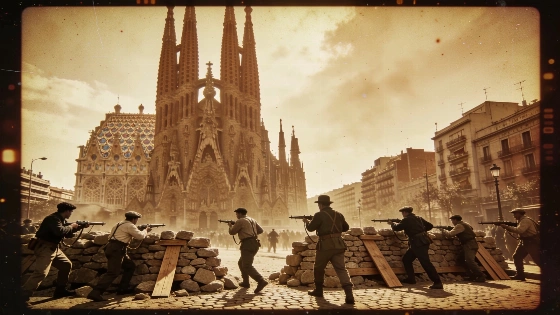
Ninety years have passed since Barcelona witnessed the defeat of the July 1936 military uprising, a turning point that shaped the city's and Spain's future. The antifascist victory, led by the Confederación Nacional del Trabajo (CNT), remains a defining moment in Spanish history. Now, a new documentary, El eco de los pasos, directed by historian Gonzalo Mateos, brings renewed attention to Joan García Oliver, one of the central figures of those turbulent days.
The film, which premiered at the Bartrina Theatre in Reus—García Oliver's birthplace—draws on his own autobiography and traces his journey from childhood poverty to revolutionary leadership. García Oliver, who co-founded Los solidarios with Durruti and Ascaso, became a symbol of the era's radical labor movement. His direct confrontations with employer-backed gunmen and his later role in the Generalitat under Lluís Companys, as well as his appointment as Minister of Justice in Largo Caballero's government, highlight the complex path of the anarcho-syndicalist movement in Catalonia.
Mateos's documentary has sparked local interest, with many attendees reportedly surprised by the revolutionary past of their own city. The film not only revisits the dramatic events of 1936 but also examines the social conditions that fueled unrest. García Oliver's early life was marked by hardship, starting work at age seven, and the broader context of mass unemployment and hunger in regions like Andalusia, as described by Manuel Azaña in 1931, underscores the desperation that drove many to radical action.
While the revolutionary fervor of 1936 was short-lived, its legacy endures in Spain's social fabric. The anarcho-syndicalist movement, though dominant in Catalonia, struggled to maintain momentum against powerful adversaries and ultimately shifted toward broader antifascist alliances. The fleeting vision of a collectivized Barcelona, with its blue overalls and transformed landmarks like the 'Hotel gastronómico colectivizado número 1,' remains a powerful image of what was briefly possible.
Today, Spain's social landscape has changed, but not all the underlying issues have disappeared. Social inequality and precarious employment persist, and the rise of technofeudalism is seen as a new threat to democracy and economic sovereignty. The rights secured through decades of struggle are now under pressure from far-right and hard-right forces, who openly challenge these achievements. However, the existence of democratic tools and peaceful means to defend these rights marks a significant difference from the violent confrontations of the past.
The story of García Oliver and the 1936 uprising continues to resonate, especially as Spain faces new social and political challenges. The documentary's release comes at a time when historical memory is increasingly relevant to current debates about democracy and social justice. In a related context, recent events in Barcelona's political life, such as the reappointment of the city's ombudsman, have also highlighted ongoing tensions and divisions, as seen in the coverage of David Bondia's second term as Síndic.
For context, the CNT was founded in 1910 and became the largest anarcho-syndicalist union in Spain, playing a decisive role during the Second Republic and the Civil War. The 1936 uprising in Barcelona was part of a broader national conflict that led to three years of civil war, with lasting consequences for Spanish society. The legacy of those years continues to inform debates about workers' rights, social justice, and the defense of democratic institutions in Spain today.