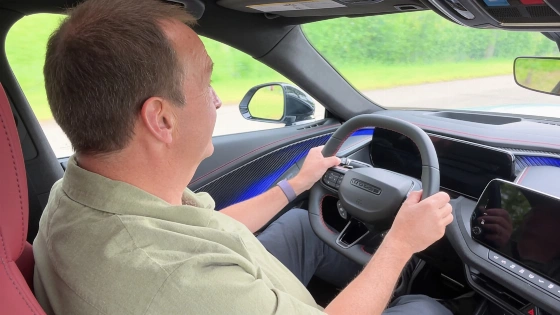
The Dodge Charger arrives in Europe with a six-cylinder turbo engine and an electric variant, offering a provocative alternative to the continent’s restrained automotive landscape. Its unapologetic design and performance set it apart from the crowd.
The new Dodge Charger doesn’t just start up—it makes a statement. In a European market focused on efficiency and restraint, the Charger stands out. It’s long, loud, and impossible to ignore, with a 5.25-meter body, oversized hood, and an exhaust note that leaves no doubt about its American origins.
Stellantis, Dodge’s parent company, usually plays by the rules in Europe. But this time, Dodge is going its own way. While most brands in the group aim for consensus and compliance, Dodge is bringing a car built for attitude. The Charger’s European launch, managed by independent importer Dodge KWA, is a gamble: buyers here will pay almost 50% more than in the U.S., but in return, they get a driving experience that’s hard to find elsewhere for under €70,000.
Official statements from Dodge Europe confirm that both the electric Charger Daytona and the gasoline-powered Charger SIXPACK will be available through authorized distributors, not just via gray import channels.
The Charger’s engine has changed with the times. The classic V8 is gone, replaced by a three-liter twin-turbo six-cylinder. Still, the numbers are serious: 550 horsepower, 720 Nm of torque, and a sound that doesn’t try to hide its downsized roots. For the first time, the Charger comes with all-wheel drive, putting its power down cleanly—0 to 100 km/h takes just over four seconds, and top speed is 285 km/h, well beyond most Stellantis models.
But the Charger isn’t about precision. Dodge has leaned into spectacle. There’s a button to disconnect the front axle, letting drivers enjoy rear-wheel antics. Instead of perfecting launch control, Dodge includes Line Lock, so you can lock the front wheels and spin the rears, leaving tire marks and a reminder of what muscle cars are meant to do.
According to MoparInsiders and other industry sources, European Chargers will be produced at the Windsor Assembly Plant in Canada, with deliveries now expected to begin in 2027 rather than early 2026 due to updated logistics and distribution plans.
Dodge hasn’t ignored the shift toward electrification. Alongside the turbo six, the Charger Daytona arrives as a fully electric option, priced the same as the gasoline model. The base electric version puts out 536 horsepower, while the Scat Pack offers 670 horsepower and 850 Nm, reaching 100 km/h in 3.3 seconds. Range is up to 500 kilometers, and charging from 20% to 80% takes less than half an hour. Top speed is limited to 220 km/h, more for battery management than lack of power.
For those who need more space, Dodge offers a four-door Charger with the same engines. The shape is less aggressive, but the message is clear: this isn’t just a car for nostalgia or weekend drives. It’s meant to show that performance and practicality can go together, and that the next generation of car enthusiasts might get their first thrill in the back seat, not just from a video game.
Europe’s car market is changing fast, with electrification and digital features setting new standards. The Charger’s arrival is a sharp contrast to cars like the Mercedes CLA 250 Plus Shooting Brake, which, as reported earlier, focus on range and efficiency over excitement. Dodge is betting there’s still a place for cars that don’t apologize for being excessive.
After sixty years and eight generations, the Charger is more than just a car. It’s a rolling piece of Americana, ready to take drivers from Europe’s careful streets to the open highways of the U.S. with the turn of a key. In a market built on conformity, Dodge’s move is a challenge and a reminder that there’s still room for passion. The Charger’s European debut isn’t about looking back—it’s a deliberate push against the current, and for those willing to pay, it offers something you won’t find in a spec sheet or an emissions chart.