The Ebola epidemic in DR Congo is worsening as health workers face attacks and resistance. Ongoing violence and community distrust are making containment efforts nearly impossible, raising fears of a much larger crisis.
In the Democratic Republic of Congo, the Ebola outbreak has entered a critical phase as health teams face mounting hostility and violence in affected regions. Attacks on medical workers and volunteers have disrupted containment efforts, while ongoing conflict and deep-rooted distrust among local communities are fueling the spread of the virus.
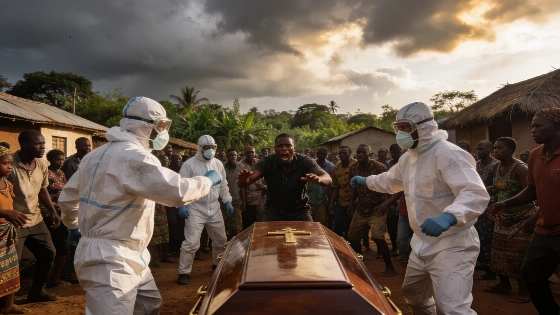
Recent incidents in Ituri province, the current epicenter, highlight the scale of the challenge. In Bunia, volunteers in protective gear were assaulted by residents while attempting to bury a man who died from Ebola. The attack, which the team narrowly survived, was triggered by community anger over strict burial protocols set by the World Health Organization (OMS). These rules, designed to prevent further infections, prohibit traditional funeral rites such as washing or touching the body, a measure that many families find unbearable.
Official figures released by Congolese authorities report over 2,000 infections and 796 deaths, but the OMS warns the real numbers could be two to four times higher. The resistance to health teams is growing, especially in rural and urban areas of North Kivu, where new cases are confirmed daily. Some groups have even threatened to burn hospitals involved in the response, though a fragile truce has held since early July.
Health workers are increasingly targeted. Attacks have been reported in Beni and other parts of North Kivu and Ituri, forcing organizations like the Red Cross to suspend humanitarian activities. According to Red Cross officials in Ituri, cooperation improves when communities understand the risks, but misinformation, local beliefs, and fatigue from repeated interventions continue to undermine prevention measures. Dialogue with community and religious leaders remains essential for any progress.
The ongoing conflict in eastern Congo further complicates the response. While government forces control most high-infection provinces, large areas remain under the influence of armed rebel groups. These militias restrict the movement of health workers, hinder contact tracing, and make it nearly impossible to reach patients who remain in isolated villages. The spread of false information by armed groups has also been identified as a tactic to incite violence against those trying to help.
Medical advisors in the region warn that some armed groups may be deliberately encouraging resistance to health interventions, using the epidemic as a tool to destabilize the area. The Red Cross has responded by constantly assessing security risks and coordinating closely with local authorities and community leaders. Despite these efforts, teams face travel restrictions, limited access to certain zones, logistical challenges, poor road conditions, and ongoing population displacement.
Volunteers working in remote areas describe how suspicion and fear often greet their arrival. In some cases, residents initially refused to engage, believing the teams brought disease. Only after extended discussions with local leaders did communities allow health workers to continue their work, underscoring the importance of trust and communication in crisis response.
Ebola outbreaks in Central Africa have historically posed severe challenges due to a combination of weak health infrastructure, ongoing conflict, and cultural practices surrounding illness and death. The current situation in DR Congo is particularly complex, as the lack of an effective vaccine or treatment for the Bundibugyo strain leaves communities vulnerable. International agencies continue to support local efforts, but the persistence of violence and misinformation threatens to undermine progress. The crisis in DR Congo serves as a stark reminder of how public health emergencies can be exacerbated by instability and mistrust, with consequences that extend far beyond national borders.