Arguments over electric car charging points are dividing Spanish apartment communities. With installations rising fast, residents face tough choices about cost, safety, and who should pay for new infrastructure in shared garages.
"Why should I pay for a preinstallation if I will never own an electric car?" That question is echoing through Spanish apartment buildings as residents argue over who should foot the bill for new charging infrastructure. With more than a million electric vehicles now on Spanish roads and registrations up 28% in August alone, shared garages have become a battleground for debates about cost, safety, and property rights.
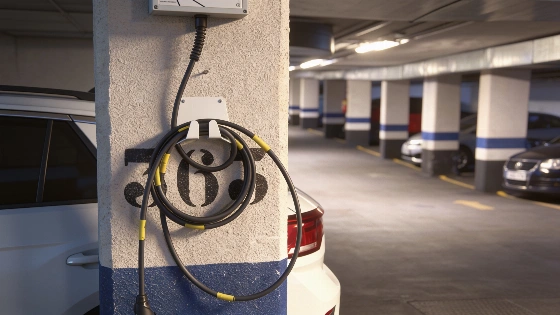
In many buildings, even a single cable running across a neighbor's parking space can spark arguments. Some residents worry about fire risks, pointing to recent incidents where electric car fires damaged entire garages. Others object to paying for upgrades they may never use. The result is a mix of protests, legal disputes, and, at times, open hostility between neighbors.
According to several Spanish legal publications, the right to install a private charging point on an individual parking space is guaranteed by law and only requires prior notification to the community, not a vote or approval from neighbors.
Antonio Calvo, president of the Colegio de Administradores de Fincas de Aragón, says the pace of change is "exponential." Where there used to be just two charging points installed per 500 spaces each year, now 10 or 15 are added annually. The surge is partly due to the arrival of Chinese electric cars, which are quickly gaining ground. Some Chinese brands have quadrupled their registrations in Spain as of August 2026, reflecting the broader shift toward electrification.
Still, many property owners are unclear about their rights. Manuela Julia Martínez, Calvo's counterpart in Madrid, notes that Spanish law allows any resident to install a private charging point in their own parking space without needing approval from the community. The Supreme Court confirmed this in December: only prior notification is required, unless the installation causes unnecessary disruption or harm to others. This is based on Article 17.5 of the Ley de Propiedad Horizontal and a Supreme Court decision from September 2026, which reaffirmed that no assembly approval is needed unless other owners are disproportionately affected.
There are two main ways to add charging in a shared garage. One is for an individual owner to connect a charging point directly to their apartment's meter, which often means running cables through communal areas. The other, now more common, is for the community to approve a preinstallation—a shared electrical backbone that makes it easier to add more chargers later. This collective approach requires a two-thirds majority and can cost between 10,000 and 20,000 euros for a 50-unit building, compared to 1,000 to 2,500 euros for a single private installation. Reports in EL PERIÓDICO and other Spanish outlets note that collective preinstallation is considered a significant improvement to communal property and needs qualified majority approval, not just notification.
Official technical regulations such as the Reglamento Electrotécnico de Baja Tensión and ITC BT-52 set strict requirements for the safe installation of EV charging infrastructure in Spanish residential buildings. These standards are designed to ensure proper cable routing through shared spaces and to minimize fire risks, which have been a major concern in recent community debates.
Calvo argues that preinstallation is the only practical solution. Without it, garages risk becoming cluttered with makeshift cables, creating both safety and legal problems. "The preinstallation is the ideal solution. Otherwise, you get dangerous cable nests and endless conflicts," he says.
Safety is still a major concern. Firefighters interviewed by EL PERIÓDICO say electric vehicle fires are "more virulent and harder to extinguish," requiring large amounts of water and new protocols. These risks make some residents wary, fearing that a single fire could threaten the entire building.
The Spanish government has tried to smooth the transition. State subsidies have covered up to 80% of installation costs, with 13.1 million euros allocated to 1,187 preinstallations under the Moves II and Moves III plans since 2020. Catalonia leads in uptake, followed by Madrid. In total, 194 million euros have supported 145,532 private charging points.
The debate over who pays and who benefits is not unique to Spain. Across Europe, the rapid shift to electric vehicles is forcing communities to rethink infrastructure, legal rules, and even relationships between neighbors. As reported earlier, the environmental impact of plug-in hybrids is also under scrutiny, adding another complication to the transition.
What is clear is that the era of the combustion engine is ending, and Spanish apartment blocks are being pushed to adapt—sometimes reluctantly and often chaotically. The rise in electric vehicle ownership is moving faster than consensus. Communities that invest in collective solutions now can avoid years of conflict and expensive retrofits later. For those hoping to ignore the issue, the reality is already parked in the garage downstairs.