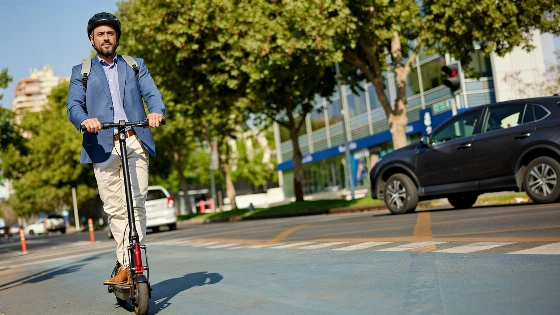
Electric scooters have flooded Spanish cities, but their real impact is far from the green revolution many hoped for. Leading urban planner Màrius Navazo argues that scooters are not replacing cars and may even harm public health.
In Spanish cities, electric scooters are everywhere. But geographer and mobility advisor Màrius Navazo says the real story is not what people expect. Scooters are not taking cars off the road. Instead, they are pulling people away from walking, cycling, and public transport—the very things that keep cities healthy and sustainable.
Navazo’s report for Zikloteka in Gipuzkoa goes straight to the point. Most scooter riders used to walk or bike. Few are former drivers. So car traffic stays the same. Daily physical activity drops. "If you ask me whether cities should bet on electric scooters for sustainable mobility, my answer is that we should first bet on bicycles," Navazo says.
From October 1, 2026, Spain will require all electric scooter users to wear helmets, set a minimum riding age of 15, and mandate reflective or illuminated gear at night, with a €200 fine for non-compliance.
The green image of scooters does not hold up. The report points out a big problem: scooters let people travel up to 25 km/h, just like bikes, but with no effort. This split between speed and effort means less exercise. Data from Barcelona shows scooter users are among the least active commuters. For health, scooters are closer to cars than to bikes.
Safety is another issue. Headlines often talk about scooter-pedestrian crashes. But Navazo’s research finds that 93% of scooter accidents involve only the rider, and most are minor. Still, there is a real risk. In Spain, one in three people hurt in a scooter accident ends up in intensive care because of head injuries. Scooters are unstable. Their high center of gravity, small wheels, and narrow platforms make them tricky to control. Fast starts and poor maneuverability add to the danger.
Rules are patchy. National law keeps scooters off sidewalks. But local governments decide where scooters can go—on streets with speed limits of 50, 40, or 30 km/h, or in pedestrian-priority zones. Navazo says cars are the real threat to people on foot. "The discussion often pits weak modes of transport against each other, as if they’re fighting for scraps. For safer, more sustainable cities, it’s the car that needs to give up space," he says.
According to Spain's Directorate-General for Traffic (DGT), the number of injury accidents involving electric scooters rose sharply to 7,423 in 2024, with 22 fatalities and 524 hospitalizations. Despite this increase, DGT data for 2025 show that electric scooters remain less deadly than bicycles, with 21 scooter user deaths compared to 29 among cyclists.
Navazo wants a strict speed limit of 10 km/h for scooters and bikes in crowded city areas. He admits it is hard to enforce. But the bigger challenge is changing attitudes. People need to respect pedestrians and move slower and more carefully through city streets.
Navazo’s vision puts pedestrians first. He calls it an "inverted mobility pyramid." Cities should feel like shared homes, he says, where walking is the default and most protected way to get around. "When you leave your house, the city should feel like a public home—not a place full of machines that can hurt you," he says. All vehicle rules, including for scooters, should focus on people walking.
Scooters are not all bad for the environment. The report admits that swapping a car trip for a scooter ride does cut emissions. But since most scooter users are not former drivers, this effect is small. The bigger problem is that scooters chip away at the culture of active mobility that cities need.
The debate in Spain goes beyond scooters. The country’s stance on Chinese investment in electric car factories, as reported earlier, shows how choices about mobility are shaping the future of city life and industry.
Navazo does not sugarcoat his findings. Scooters may look modern and easy, but their spread could hurt the push for healthy, people-focused cities. The facts are clear. If city planners want greener, healthier streets, they should back walking, cycling, and public transport. Not the latest gadget on two wheels.