Spain’s average electricity price falls to 87.32 euros per MWh on July 11. The lowest rate, even negative, appears midday. The most expensive hour hits late evening. The shift impacts household bills and daily routines.
Spain’s electricity market sees a significant shift this Saturday, July 11, as the average price per megawatt hour (MWh) drops to 87.32 euros, according to data from the Operador del Mercado Ibérico de la Energía (OMIE). This marks a sharp 25.91% decrease compared to the previous day’s rate of 117.85 euros per MWh, offering temporary relief for households and businesses facing high energy costs.
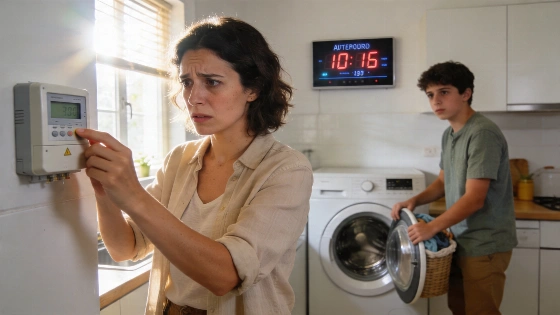
The most notable change comes in the midday hours. Between 13:00 and 15:00, the wholesale price of electricity falls to -0.01 euros per MWh, entering negative territory. While such negative or near-zero prices are rare, they do not translate into free electricity for end users, as final bills still include regulated charges, grid fees, and taxes. However, these hours present an opportunity for consumers to optimize their energy use by running appliances like washing machines or dishwashers when rates are lowest.
In contrast, the evening brings a sharp spike. The highest price of the day is set between 21:00 and 22:00, reaching 155.34 euros per MWh. This peak coincides with the time many people return home and energy demand typically rises. Households are advised to avoid using high-consumption devices during this window to limit the impact on their bills.
Throughout the day, electricity prices fluctuate widely. Early morning hours remain expensive, with rates above 140 euros per MWh until 08:00. Prices then drop steadily, hitting their lowest point in the early afternoon, before climbing again in the evening. The full hourly breakdown for July 11 is as follows: 00:00–01:00 at 155.03 €/MWh, 01:00–02:00 at 148.31 €/MWh, 02:00–03:00 at 141.79 €/MWh, 03:00–04:00 at 142.89 €/MWh, 04:00–05:00 at 149.99 €/MWh, 05:00–06:00 at 146.75 €/MWh, 06:00–07:00 at 154.34 €/MWh, 07:00–08:00 at 149.52 €/MWh, 08:00–09:00 at 114.12 €/MWh, 09:00–10:00 at 68.45 €/MWh, 10:00–11:00 at 16.09 €/MWh, 11:00–12:00 at 0.33 €/MWh, 12:00–13:00 at 0 €/MWh, 13:00–14:00 at -0.01 €/MWh, 14:00–15:00 at -0.01 €/MWh, 15:00–16:00 at 0 €/MWh, 16:00–17:00 at 0.94 €/MWh, 17:00–18:00 at 5.57 €/MWh, 18:00–19:00 at 39.72 €/MWh, 19:00–20:00 at 80.23 €/MWh, 20:00–21:00 at 125.73 €/MWh, 21:00–22:00 at 155.34 €/MWh, 22:00–23:00 at 154.89 €/MWh, and 23:00–24:00 at 145.6 €/MWh.
These pronounced fluctuations highlight the importance of monitoring hourly rates and adjusting consumption habits. For many Spanish families, the timing of energy use can make a noticeable difference in monthly expenses. The structure of Spain’s electricity market, with its variable pricing and additional charges, means that even negative wholesale prices do not eliminate costs for consumers. Instead, strategic use of appliances during cheaper periods remains the most effective way to manage bills.
Energy affordability and access remain pressing issues, especially as extreme weather events become more frequent. A recent study in Barcelona found that air conditioning is far less common in low-income households, underscoring the broader challenge of energy inequality. For more on how heatwaves and energy costs intersect in Spain, see this analysis of disparities in summer cooling access: Barcelona’s divide in air conditioning during heatwaves.
Spain’s electricity pricing system is designed to reflect real-time supply and demand, which can lead to dramatic swings within a single day. While today’s drop offers some respite, the volatility of the market means that consumers must remain vigilant. Understanding when and how to use electricity efficiently is increasingly essential for managing household budgets in a changing energy landscape.