A senior official from the Confederación Hidrográfica del Júcar testified that Carlos Mazón was unprepared when he joined the emergency center during the October 2024 dana. The testimony challenges previous claims about the crisis response.
Testimony from a senior figure at the Confederación Hidrográfica del Júcar (CHJ) has cast new light on the management of the severe flooding that struck Valencia on October 29, 2024. According to statements made in court, former president of the Generalitat Valenciana, Carlos Mazón, arrived at the emergency coordination center without a clear understanding of the situation, requiring a full briefing on developments that had already unfolded over several hours.
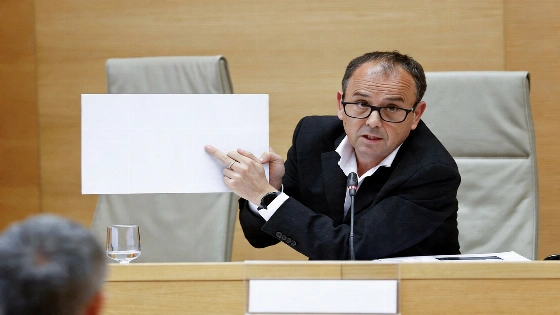
Ignacio Valero, head of the CHJ’s hydrological information system, described Mazón’s late arrival at the Cecopi emergency center in Catarroja as disoriented and unfamiliar with the ongoing crisis. Valero, testifying as a witness before the investigating judge on June 4, recounted that Mazón joined the emergency meeting at 20:28, after spending several hours in central Valencia. The official compared Mazón’s entrance to that of an outsider suddenly placed in the midst of a complex operation, noting that the president needed all key events and decisions explained from the beginning.
During the meeting, participants updated Mazón on the critical issues at hand, including the overflow of the Barranco del Poyo and the potential risk of the Forata dam breaking—a scenario that, according to the Generalitat, could have resulted in thousands of casualties. Despite the urgency, Valero stated that the main emergency alert, Es-Alert, had already been sent to residents’ mobile phones at 20:11, prior to Mazón’s arrival, and that the decision to issue this alert had been made as early as 19:00.
Valero emphasized that while Mazón’s late involvement led to a loss of time as the team had to repeat information, it did not delay the activation of the most crucial safety measures. The president was briefed by both the subdirector general of Emergencies, Jorge Suárez, and the head of the Provincial Fire Consortium, José Miguel Basset. After taking charge, Mazón directed the meeting, instructing participants—including those connected via videoconference from the CHJ and the Government Delegation in Valencia—on when to join and leave the session. Valero noted that, despite Mazón’s order to end the meeting at 1 a.m., many officials continued working through the night.
The testimony directly challenges the narrative previously put forward by the Generalitat and former high-ranking officials, who had argued that state agencies such as the CHJ and the State Meteorological Agency failed to provide timely warnings, thus hindering the regional government’s response. However, multiple witness statements and judicial documents have since undermined this claim, suggesting that the main decisions and alerts were already in place before Mazón’s intervention.
Valero’s account also highlighted the role of Salomé Pradas, the then-emergency councillor who introduced Mazón at the Cecopi center and is now the main subject of the ongoing investigation. After Mazón assumed control, Pradas reportedly ceased to participate in the discussion. The court proceedings continue to examine the sequence of decisions and the flow of information during the crisis.
For context, the Confederación Hidrográfica del Júcar is responsible for managing water resources and flood risks in the region, operating under the Ministry for Ecological Transition. The 2024 dana was one of the most severe weather events in recent years for Valencia, prompting widespread emergency measures and scrutiny of official responses. The case has drawn attention to the coordination between regional and state authorities during natural disasters, echoing the kind of institutional tensions seen in other high-profile incidents, such as those described in coverage of public conflicts in Valle Salvaje.
Spain’s emergency management system relies on rapid coordination between local, regional, and national agencies. The Es-Alert system, used during the 2024 floods, is designed to deliver urgent warnings directly to residents’ phones. The ongoing judicial investigation is expected to clarify the responsibilities and decision-making processes that shaped the response to the disaster.