Enric Mas has finally shed his reputation as cycling’s perennial runner-up by winning the 2026 Vuelta a España. His victory ends an 11-year wait for a Spanish Grand Tour champion and marks a turning point in a career built on quiet persistence.
Enric Mas crossed the finish line in Madrid, not as the familiar runner-up, but as the new Vuelta a España champion. After years of coming close, the 31-year-old from Artà delivered the result that had always slipped away, ending Spain’s long wait for a homegrown Grand Tour winner.
This win is more than a trophy for Mas. It’s a public shift in a story that has followed him for years. Critics have called him cautious, even cold, seeing calculation where others saw risk. When the 81st Vuelta started in Monaco, few expected Mas to seize the moment—especially after Tadej Pogacar’s crash changed the race. Mas took the leader’s jersey and kept it for most of the race, sealing his victory with a stage win at Alto de Aitana and a record climb at Sierra de La Pandera.
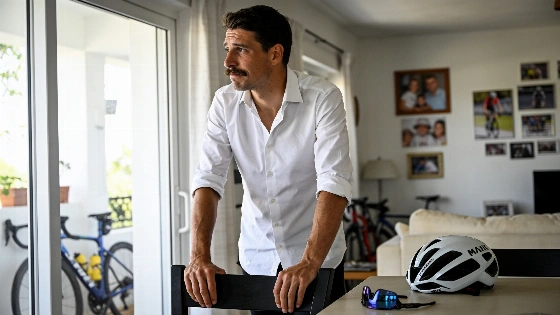
Enric Mas completed the 2026 Vuelta a España in 73:52:55, riding a Canyon Aeroad CFR on the final day.
Canyon Media Centre
Mas’s path here has been anything but easy. His career is full of setbacks: crashes, injuries, mechanical problems, and even a struggle with descending that nearly derailed his ambitions. He never lashed out or looked for excuses in the press. Instead, he rebuilt himself after every setback, earning respect inside the peloton even as public praise lagged behind.
Alberto Contador once called Mas the future of Spanish cycling during his own farewell at the Angliru in 2017. Mas’s early promise was clear when he outsprinted Simon Yates atop La Gallina in 2018, but the breakthrough never quite came. His move to Movistar in 2020 was supposed to start a new chapter, but the big win stayed out of reach—until now.
Mas’s record tells the story of a rider always close: second in the Vuelta in 2018, 2021, and 2022; third in 2024; a handful of stage wins and youth classifications, but never the top step. His best season on paper was 2022, when he finished 16th in the Procyclingstats world ranking and beat Pogacar at the Giro della Emilia. Still, the major win wouldn’t come.
According to Reuters and BBC, Mas's victory in 2026 was the first Grand Tour win for a Spanish rider since 2014 and the first for Movistar since 2019, ending a long period of foreign dominance in the race.
Reuters and BBC
That changed in 2026. With Pogacar out, Mas faced Primoz Roglic and Felix Gall, finishing 2’15” ahead of Roglic and 2’44” clear of Gall. The Spanish flag returned to the top of the podium for the first time since Alberto Contador’s Giro win in 2015, and for the Vuelta, since Contador’s 2014 victory. The drought was over.
Mas’s rise from Mallorca’s amateur races to the World Tour began with the Fundación Alberto Contador, then a move to Klein Constantia in 2016, and a World Tour debut with Quick Step in 2017. Each step brought progress, but also the kind of setbacks that would have ended many careers. His story stands apart from other Spanish athletes who have looked for opportunity away from the spotlight, as in the recent case of Mario Pérez’s move from Valencia to Valdemoro-Sierra.
For Spanish cycling, Mas’s win is more than personal redemption. It marks a return to relevance after a decade of foreign winners and doubts about the next generation. The podium in Madrid—Mas, Roglic, Gall—was a reminder that persistence, not hype, shapes legacies in this sport.
Mas’s victory pushes back against the idea that only charisma or spectacle matter in cycling. He has shown that steady work, humility, and the ability to handle criticism can still lead to the sport’s highest honors. With this win, Enric Mas has changed his own story and restored pride to Spanish cycling. The era of the eternal second is over. Now, the record books list Mas as a champion.