Elisenda Alamany from ERC accuses the Catalan government of poor planning after mobility issues during the solar eclipse. She links the incident to broader failures in public services and declining trust.
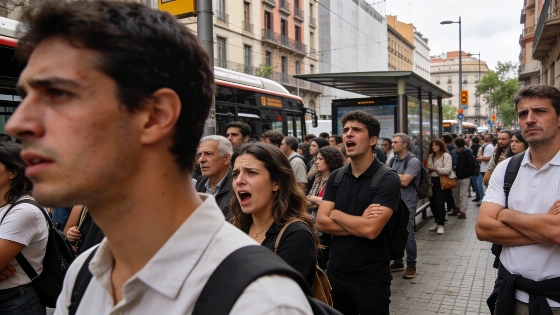
Sharp criticism has emerged from ERC against the Catalan government following significant mobility disruptions in Barcelona during last Wednesday’s total solar eclipse. Elisenda Alamany, ERC’s secretary general and candidate for Barcelona’s city hall, publicly blamed the regional executive for inadequate planning, describing the transport response as a clear failure. According to Alamany, the incident highlights a deeper disconnect between the government and the daily concerns of residents.
Speaking at the Festa Major de Gràcia, Alamany dismissed the idea that the eclipse-related transport chaos was an isolated event. She argued that the problems reflect a pattern of mismanagement in public services, pointing to ongoing strikes, infrastructure bottlenecks, and disappointing education results as further evidence. In her words, these repeated setbacks have left citizens feeling as if the government keeps them in a “permanent eclipse.”
Alamany warned that the accumulation of such incidents not only damages the political standing of the Catalan executive but also erodes public confidence in institutions. She stressed that the credibility of public authorities is at stake when essential services falter repeatedly. The ERC leader’s remarks come amid broader scrutiny of the government’s ability to anticipate and manage high-impact events, especially those affecting daily life in major cities like Barcelona.
Beyond Catalonia, Alamany also addressed the situation in Ceuta, where heightened security measures have been in place since Saturday to monitor potential cross-border movements. She characterized the developments there as primarily geopolitical rather than purely migratory or humanitarian, and criticized the Spanish government for its lack of foresight and what she called the “paralysis” of Prime Minister Pedro Sánchez. Alamany called for stronger European coordination to address the humanitarian challenges at the border.
Recent weeks have seen mounting pressure on Spanish authorities over their handling of both regional and national crises. As noted in a related analysis, management failures in Ceuta have intensified public scrutiny of officials and fueled calls for greater accountability. The convergence of transport breakdowns, labor unrest, and border tensions is shaping a climate of uncertainty for residents and raising questions about the effectiveness of current leadership.
For context, Barcelona’s transport network is among the busiest in Spain, and any disruption can quickly escalate into citywide gridlock. The recent eclipse drew large crowds and put additional strain on public infrastructure, exposing vulnerabilities in emergency planning. Meanwhile, Ceuta’s unique position as a Spanish enclave bordering Morocco makes it a frequent flashpoint for migration and security issues. The combination of local and national challenges underscores the complexity of governance in Spain’s diverse regions and the importance of responsive, well-coordinated public administration.