The government's handling of the Ceuta crisis has reignited debate over political holidays. Operational lapses and communication missteps have fueled perceptions of an absent leadership. Calls for accountability are growing.
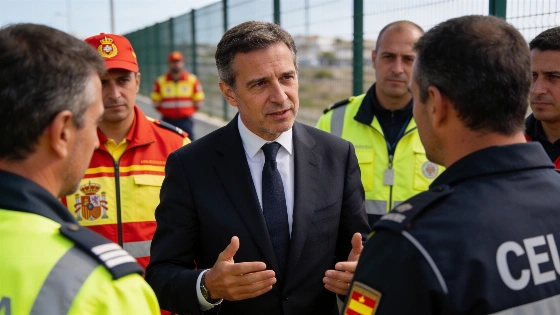
The recent crisis in Ceuta has sharply exposed tensions over how Spain's political leaders manage emergencies during the summer holiday period. As thousands of irregular migrants entered the autonomous city, criticism mounted over the government's response and the visibility of top officials. The situation has not only highlighted operational shortcomings but also intensified the annual debate about whether politicians should take vacations during national emergencies.
Public frustration grew as images and social media posts questioned the whereabouts of key figures, including the president. While some officials interrupted their holidays to visit Ceuta, others faced accusations of being disengaged. The government attempted to counter this narrative by releasing photos of videoconferences from the official residence in La Mareta, but these efforts were met with skepticism and even ridicule online due to perceived staging and lack of transparency.
Political opponents seized on the moment. The Partido Popular and other critics accused the executive of prioritizing personal time over urgent national matters. Past incidents, such as the controversy over the use of official residences and the purchase of luxury properties for public officials, resurfaced in the debate. Notably, the president of the Community of Madrid, Isabel Díaz Ayuso, faced scrutiny after it was revealed she spent time at a government-owned villa, a story first reported by the press rather than her administration.
Communication missteps further complicated the government's position. Videos of the president sharing cultural recommendations circulated while rescue operations were still underway in Ceuta, prompting backlash for perceived insensitivity. Analysts suggest that while some content may have been pre-scheduled, the timing reinforced the impression of a leadership out of touch with the crisis on the ground.
Operationally, experts argue that the government underestimated the scale and nature of the Ceuta incident, treating it as a migration issue rather than a broader geopolitical challenge. This misjudgment led to insufficient resources and delayed responses, with local residents expressing feelings of abandonment. The Ombudsman has launched an inquiry into the management of the crisis, requesting information from multiple government bodies.
Internal contradictions also emerged, with ministries offering differing accounts of their preparedness and the causes of the crisis. Promises to return all new arrivals were criticized as unrealistic, given legal constraints on deporting minors and asylum seekers. The government has maintained that ministers responsible for emergencies remain in Spain and are ready to act, but the perception of an absent or distracted leadership has proven difficult to dispel.
Similar disputes over political accountability during emergencies have played out in other contexts. For example, as reported in a previous analysis of Senate-government tensions during the Ceuta crisis, missed hearings and conflicting commitments have further strained public trust in official responses.
In the broader context, the Ceuta crisis underscores the challenges of governing in an era of constant scrutiny and rapid information flow. The expectation that leaders remain visibly engaged, even during personal time, is now a persistent feature of Spanish political life. As the debate continues, the effectiveness of crisis management and the transparency of official actions remain under close watch.
Ceuta, a Spanish enclave on the North African coast, has long been a focal point for migration and border security issues. The city’s unique position makes it especially sensitive to geopolitical shifts and humanitarian pressures. The recent events have reignited calls for clearer protocols and more robust coordination among national and regional authorities. The government’s handling of the crisis may influence future policy on both migration and the conduct of public officials during emergencies.