The European Parliament has backed stronger action against drug trafficking as Spain faces growing pressure along its Atlantic coast and major maritime routes.
The European Parliament has backed a tougher European response to drug trafficking after a vote that highlighted the scale of the challenge facing Spain and other entry points. The resolution was approved on 17 September 2026 by 601 votes to four, with five abstentions. It calls for more funding for security forces, closer cooperation against criminal networks and stronger coordination on maritime control, port security and prevention. In its official statement, the European Parliament described trafficking networks as increasingly interconnected, organised and aggressive, arguing that the response must be European rather than limited to individual national authorities.
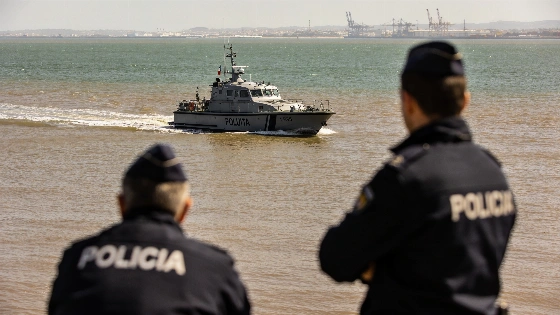
The vote came as Portuguese authorities detained a speedboat in the Tagus estuary carrying six suspected Spanish traffickers, along with one person from Suriname and three from Guyana. The case adds to a year marked by deadly risks on Spain’s southern coast and persistent violence linked to the cocaine trade.
The resolution’s sponsors are seeking recognition of frontline personnel fighting drug trafficking as high-risk workers across the EU, underlining the danger faced by officers involved in maritime and port operations.
Two Guardia Civil officers died off Huelva in May 2026 while pursuing a drug boat. In Brussels, nearly seventy shootings have been recorded so far this year in connection with drug trafficking. These incidents give the parliamentary resolution a concrete security backdrop rather than leaving it as a general political declaration. The European Parliament’s agenda materials linked the vote directly to protecting the EU’s external borders and supporting law-enforcement personnel dealing with trafficking in European waters.
The main measures are practical: increase financing and resources for law-enforcement bodies, intensify cooperation between customs and police authorities, and tighten the fight against money laundering. They also include stronger port security and the seizure of criminal assets. Juan Fernando López Aguilar, a Spanish Social Democrat and one of the resolution’s promoters, told DW that the vote reflected greater recognition of drug trafficking as serious transnational crime covered by European criminal law.
Spain is central to the discussion because maritime routes from Latin America reach Europe through the Strait of Gibraltar, the Atlantic coast and the Canary Islands. López Aguilar said Spain needs European solidarity for patrols in those areas. Cocaine also enters through European ports hidden inside large containers, so the pressure does not stop at the coastline or with speedboat interceptions. Independent European reporting on the resolution likewise highlights Spain’s position as one of the main entry points for trafficking into the EU.
The agreed approach calls for closer data exchange between customs, police and judicial authorities, with Europol, Eurojust, Frontex and the European Maritime Safety Agency involved in coordinated operations. It also identifies West Africa as a key transit region and China as an important partner in controlling precursors used for synthetic drugs.
Latin America and the Caribbean feature prominently in the agreed text, alongside the arrangement reached at the Santa Marta summit between the EU and CELAC. The resolution avoids describing countries through the label “narco-states”. Instead, it calls for institutional cooperation and the implementation of European rules on whistleblower protection, legal assistance and physical protection in third countries.
The route map is also changing. Raquel García-Hermida Van-Der-Walle, a liberal member of the European Parliament, said recent Europol reports show that departures from Ecuador have increased over the past five years and are increasingly passing through West Africa rather than heading directly to the European Union.
That shift explains the resolution’s focus on deeper cooperation with West African countries. García-Hermida pointed to the case of Jos Leijdekkers, a Dutch fugitive wanted by authorities who is sheltering in Sierra Leone, according to her account. Attempts by the Netherlands and its European partners to secure his extradition have failed. She presented the case as evidence that diplomatic pressure on third countries must also intensify.
The same logic applies to the EU’s outermost regions, including the Azores, the Canary Islands and French Guiana. García-Hermida said their weaker socioeconomic structures and lower living standards can make corruption more attractive. The parliamentary approach links these vulnerabilities to prevention, law enforcement and international cooperation instead of treating each route as a separate national problem.
The argument also cuts across Europe’s migration debate. García-Hermida rejected the idea that irregular migration and drug trafficking can be treated as one single problem, recalling that drug trafficking existed in Galicia from the 1970s without being connected to either legal or illegal migration. Criminal networks have expanded into human trafficking, arms trafficking and migrant smuggling, but that does not erase the distinct mechanisms behind each activity.
The security dimension has already shaped other European border discussions, including the dispute examined in an earlier border report. In this case, however, the Parliament is not proposing a single closure of Europe’s borders. It is calling for shared investigations and information exchange through Europol, Eurojust and the European Union Drugs Agency, alongside stronger coordination among customs, police and judicial services.
EUDA director Lorraine Nolan said reliable data, evolving threat analysis and early warnings help authorities anticipate developments, improve preparedness and coordinate action. Her agency’s remit also includes prevention and harm reduction. That combination matters because enforcement alone cannot track networks that move across borders and continents.
The resolution does not end the trafficking routes or remove the risks faced by Spanish officers. It establishes a clearer European response: finance the agencies under pressure, strengthen port and maritime security, follow the money, share intelligence and confront the diplomatic obstacles that allow fugitives and routes to shift. The European Parliament’s official communication and independent European coverage both emphasise a coordinated response involving national authorities and European agencies. For Spain, the message is direct: its Atlantic and southern borders are a European security responsibility, not a national burden to be managed alone.