Britain is studying temporary limits on fuel purchases as energy prices rise again. Brussels is asking governments to cut gas and electricity use, while Spain prepares fresh support for drivers and households.
The British proposal has not been approved. It includes temporary limits on fuel purchases and a possible motorway speed limit of 80 kilometres per hour.
According to the Daily Express, emergency services, public transport and activities considered critical could receive priority access to fuel. Food distribution and healthcare are among the sectors named. The debate is moving beyond prices. It now concerns access and demand.
That is the pressure point.
Spain is preparing another support package. Brussels is asking governments to reduce gas and electricity use before winter. The two responses pull in different directions.
Spain and Portugal used the so-called Iberian exception from June 2022 to December 2023. The temporary mechanism, approved by the European Union, limited the price of gas used to generate electricity during the previous energy crisis.
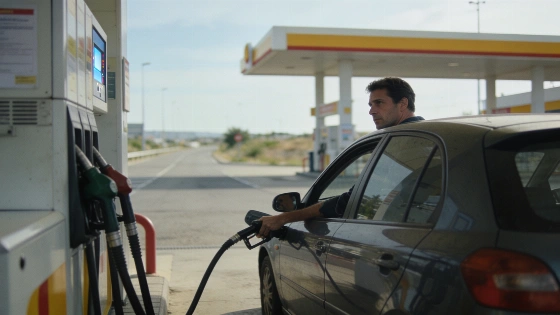
Spanish drivers are already feeling the pressure at the pump.
Petrol is close to 1.98 euros per litre. It has risen 9.6% since 1 September, when the discount was cut to five cents, according to data from the Ministry for the Ecological Transition. Diesel has climbed 10% to 1.97 euros, even after its 20-cent discount was restored this month.
The Council of Ministers is expected to announce a new aid package within hours of the latest price figures. The first Spanish response will focus mainly on extending fuel discounts.
Measures tied to the electricity market have also been discussed by Carlos Cuerpo, the first deputy prime minister and economy minister. The talks involve sectors most exposed to the shock. The possible return of the so-called Iberian exception is also under discussion. No final decision has been presented.
The European Commission’s Gas Coordination Group met again on 25 September to assess conditions in the gas market. The Commission has framed demand reduction primarily as a way to contain prices in a tight global market, rather than as a response to an immediate interruption of supplies.
Direct aid and tax cuts can ease the burden on households and companies. They can also weaken the incentive to use less energy.
The European Commission wants national measures to be temporary. It also wants them aimed at people and businesses that genuinely need help. The Commission warns against policies that encourage higher gas consumption, distort the single market or shift costs onto other European countries.
Brussels is returning to measures used in 2022.
Energy Commissioner Dan Jorgensen has asked the Twenty-Seven to consider cutting electricity demand during peak hours. His suggestions also include lower temperatures in public buildings, limits on outdoor heating and the nighttime shutdown of unnecessary public lighting.
Reuters reported that the request appeared in a letter dated 25 September. The letter said the measures could remain in place for as long as necessary. The request is voluntary for now. It does not introduce new mandatory consumption cuts.
The concern is partly logistical. The European Union has diversified supplies and expanded its capacity to import liquefied natural gas. Gas consumption is also lower than at earlier levels.
Storage facilities are at 70% of capacity. That is the lowest level for this time of year in more than a decade. Governments fear a late rush to refill the sites could push prices higher. Euronews described the storage position as exceptionally low.
Spain has tried speed limits before.
In 2011, Brent crude prices were rising and the country was in a deep economic crisis. The government temporarily cut the maximum speed on motorways and dual carriageways to 110 kilometres per hour for four months.
Officials estimated savings of around 450 million euros for the balance of payments through lower oil imports. Changing road signs cost about 230,000 euros.
The situation is different now. The policy problem is not.
Consumers are receiving help with energy bills while the market is sending a signal to use less. Households face other pressures as well, including the trends described in earlier reporting on European families seeking milder conditions in northern Spain.
Oxford Economics expects the average European gas price to reach 85 euros per megawatt-hour between the fourth quarter of 2026 and the first quarter of 2027. That would be 140% above the same period a year earlier.
The consultancy expects eurozone inflation to stay around 4% this winter as gas prices feed into electricity costs. It also forecasts two further European Central Bank rate rises. Those increases would take the official rate to 3% by the end of the year.
Spain's current fuel support is nearing a decision point. Spanish reporting indicates that extraordinary fuel discounts and some support for hauliers and the agricultural sector are due to expire on 30 September 2026 unless they are extended.
At the end of September, the discounts stood at five cents per litre for petrol and 20 cents for diesel. The timing of any new package matters to drivers and transport-intensive businesses.
The figures leave little room for a policy based only on subsidies.
Spain can delay part of the shock through fuel discounts. Brussels is right to insist that broad support must not become a permanent reward for higher consumption.
The clearest option is temporary help for exposed households and sectors. Voluntary savings measures could protect supply without presenting the restrictions under study as settled policy.