FAES backs Feijóo’s proposal for national support to the unborn, echoing Madrid’s approach. The move reignites debate over abortion laws and triggers sharp criticism from the left.
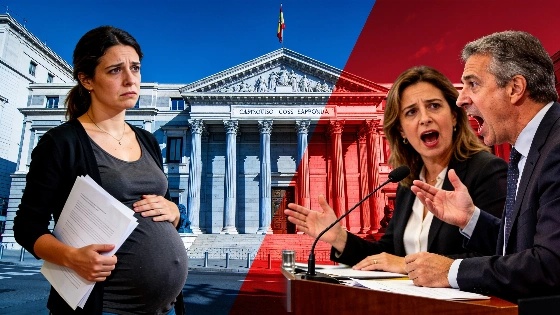
The conservative think tank FAES, led by former Prime Minister José María Aznar, has publicly endorsed Alberto Núñez Feijóo’s recent pledge to introduce a nationwide law granting public aid to the unborn if he becomes Spain’s next leader. The proposal, modeled after measures already in place in Madrid under Isabel Díaz Ayuso, has quickly become a flashpoint in the country’s ongoing debate over abortion and family policy.
In a detailed statement, FAES defended the initiative as a step to encourage birth rates and support maternity, arguing that such measures should not be seen as controversial. The foundation criticized the left’s reaction, describing it as hypocritical and questioning why policies aimed at supporting families and increasing fertility would be considered offensive or aggressive.
FAES also linked the discussion to the broader issue of abortion, describing it as “a misfortune that can be decriminalized under certain conditions and timeframes.” The organization made clear its opposition to enshrining abortion rights in the Spanish Constitution, a move currently advocated by some left-wing parties. According to FAES, the left’s response to the Popular Party’s (PP) plan to grant administrative rights to the unborn is “reactionary” and out of step with most of Europe, noting that only Poland has comparable legislation.
The statement further questioned which rights would actually be compromised by the proposed law, and accused the left of turning abortion into both a legal entitlement and an ideological symbol. FAES argued that efforts to constitutionalize abortion rights are based on a “fabricated threat” and only serve to deepen political polarization.
Referencing legal precedent, FAES pointed out that while Spanish law recognizes certain rights for the unborn—such as inheritance and civil protections, provided the child is born alive—the Constitutional Court ruled in May 2023 that the fundamental right to life applies only to those already born. This decision upheld Spain’s current abortion law, which is based on a system of time limits. Feijóo has stated that he respects this ruling and that the PP would not seek to repeal the existing law if it comes to power. The issue remains contentious within the party, as evidenced by its exclusion from the PP’s political platform.
FAES praised Ayuso’s regional policy, now adopted by Feijóo, as a measure designed to ensure that no child is left behind in a country with one of the world’s lowest fertility rates. The foundation rejected claims from the left that the proposal infringes on women’s reproductive freedom, emphasizing that Spanish law already grants certain property and civil rights to the unborn, contingent on live birth.
The statement concluded by noting that none of these measures would overturn the current abortion law, which remains in force in a country where more than 100,000 voluntary terminations are performed annually. The debate over the rights of the unborn and the scope of state support continues to divide Spain’s political landscape.
This renewed focus on reproductive rights and political polarization echoes recent developments in other regions, such as the push for broader left-wing coalitions in Valencia, where Mónica Oltra’s candidacy has highlighted shifting alliances and priorities in local politics.
Spain’s demographic challenges remain acute, with the country consistently reporting one of the lowest birth rates in Europe. According to national statistics, the fertility rate has hovered below 1.3 children per woman for several years, raising concerns about long-term population decline and the sustainability of social welfare systems. The debate over how best to support families and address these trends is likely to remain at the forefront of Spanish politics, especially as parties prepare for upcoming elections and seek to define their positions on sensitive social issues.