Alberto Núñez Feijóo accuses Óscar Puente of targeting the Crown and acting irresponsibly. The PP leader claims the government is undermining national unity. The dispute highlights growing political friction.
Political tensions escalated in Spain after Alberto Núñez Feijóo, leader of the Partido Popular (PP), openly criticised Transport Minister Óscar Puente for his recent comments regarding the Crown. Feijóo condemned Puente for what he described as an unprecedented attack on the monarchy, following a social media post in which Puente labelled a photo of King Felipe VI with Javier Negre as an 'absolute ignominy'.
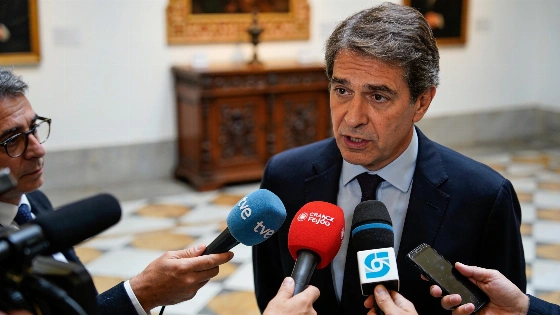
During a visit to a photographic exhibition dedicated to Leopoldo Calvo-Sotelo, Feijóo accused members of the current government of behaving in a manner unbefitting their positions. He argued that ministers were resorting to personal insults against both political opponents and private citizens, and warned that such conduct was damaging the institutions of the state. Feijóo specifically pointed to Puente's remarks as an example of crossing a line by publicly criticising the Crown, a move he called without precedent in Spain's recent history.
Feijóo went further, stating that Spain is suffering under a government that, in his view, acts against the interests of the nation. He claimed that the executive is occupying and degrading state institutions, and accused it of initiating a process that threatens the constitutional framework established in 1978. According to Feijóo, the current administration is prioritising its own interests over those of the country, undermining the principle of equality among Spanish citizens in pursuit of political advantage.
The PP leader also addressed the recent influx of migrants into Ceuta, criticising the government's response as passive and indifferent to the security and well-being of local residents. He questioned whether former Prime Minister Calvo-Sotelo would have engaged in light-hearted activities at the official residence during such a crisis, using the comparison to highlight what he described as the government's inadequate handling of serious national issues.
Feijóo's remarks come at a time of heightened political division in Spain, with debates over the role of the monarchy, government accountability, and migration policy all contributing to a charged atmosphere. The controversy surrounding Puente's comments reflects broader concerns about the tone and direction of political discourse in the country. The Spanish Constitution of 1978 established the monarchy as a key institution, and public criticism of the Crown by government officials remains a sensitive issue. In recent years, debates over the separation of powers and the integrity of state institutions have become increasingly prominent, especially as cases of alleged corruption and political manoeuvring draw public attention. The situation in Ceuta, meanwhile, continues to test the government's capacity to manage border security and humanitarian challenges. These developments underscore the complexity of Spain's current political landscape and the ongoing debate over the balance between tradition, institutional respect, and political change.