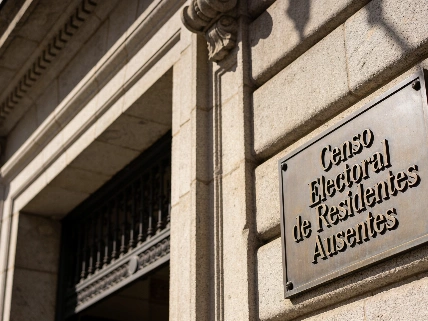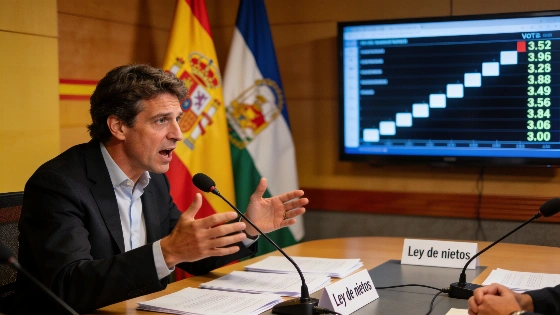
Alberto Núñez Feijóo accuses the government of manipulating the electoral roll. The 'Ley de nietos' could add 2.5 million new voters. The PP leader warns of political consequences and calls for stricter nationality rules.
Alberto Núñez Feijóo has sharply criticized the Spanish government for what he describes as deliberate manipulation of the electoral roll through the 'Ley de nietos'. In a recent interview, the Partido Popular leader claimed that the PSOE is using the Democratic Memory Law to grant Spanish nationality to descendants of those affected by the Civil War, potentially increasing the number of eligible voters by 2.5 million. Feijóo argued that this move is driven by the ruling party's fear of losing its majority, stating that the current electorate does not guarantee their hold on power.
According to Feijóo, the government is actively seeking to expand the voter base in Latin America, with more than 2.6 million nationality applications submitted under the 'Ley de nietos'. He highlighted that over 650,000 of these requests originate from Buenos Aires alone, and only a small fraction—around 100,000—have been denied. The PP leader also pointed to the regularization of 1.3 million immigrants in recent years as further evidence of what he calls 'electoral engineering'.
Feijóo expressed concern over the government's authority to assign a province of reference to new citizens whose ancestral ties are unclear, suggesting this could influence electoral outcomes. He also questioned the transparency of the process, noting that in Cuba, the handling of applications has been outsourced to a state-owned company. The opposition leader insisted that such a dramatic increase in the electoral roll within just eighteen months is unprecedented in Spanish democracy.
In response, Feijóo announced that the Partido Popular will propose a reform of the nationality law, introducing stricter requirements for those seeking Spanish citizenship. He also criticized the government's recent regularization of approximately one million immigrants, arguing that it may conflict with European law and expressing hope that the Supreme Court will intervene.
The political tension comes amid broader scrutiny of the PSOE's leadership. Feijóo referenced the legal troubles of former Prime Minister José Luis Rodríguez Zapatero, alleging a dramatic fall from grace and suggesting that Pedro Sánchez's support for Zapatero indicates deeper issues within the party. He questioned whether their relationship extended beyond politics to economic interests, warning that the ongoing investigation could have lasting consequences for the PSOE.
Feijóo outlined his priorities should he become prime minister, focusing on institutional reform, housing, immigration, taxes, and security. He advocated for measures to support the middle class, including a reduction in personal income tax, though he did not specify the extent of the proposed cuts. On electoral reform, Feijóo expressed skepticism about the possibility of consensus with the current PSOE leadership, but reiterated his preference for a system that rewards the most-voted list, similar to the model used in municipal elections.
This debate over the expansion of the electoral roll and the government's approach to nationality laws comes at a time of heightened political maneuvering in Spain. Recent developments, such as calls from Junts for Sánchez to step down to prevent a far-right government, underscore the volatility of the current political landscape. For more on the pressures facing the PSOE leadership, see this analysis of Catalan demands and party tensions: Catalan demands put pressure on PSOE leadership amid political deadlock.
For context, the 'Ley de nietos' is part of Spain's broader effort to address historical memory and the legacy of the Civil War. The law allows descendants of Spaniards who fled or suffered persecution during that period to apply for citizenship. The measure has been controversial, with supporters arguing it corrects historical injustices, while critics warn of its potential impact on the electoral system. Spain's electoral roll is updated regularly, but such a large influx of new voters in a short period is rare. The debate highlights ongoing tensions over immigration, national identity, and the balance of political power in Spain.