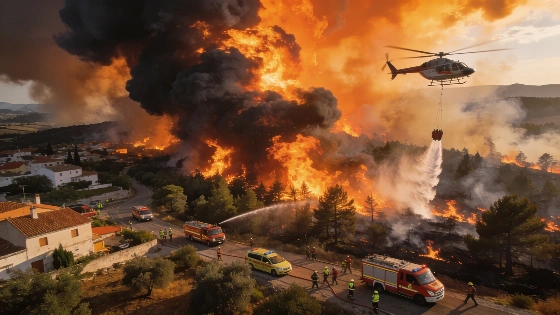
A major wildfire in southwest Madrid remains active despite overnight efforts. Emergency teams focus on protecting towns as wind conditions threaten containment. Authorities warn the situation could shift rapidly.
Emergency services in southwest Madrid are facing another critical day as a large wildfire continues to threaten populated areas. Despite intensive overnight operations, the fire remains active, with its future course hinging on unpredictable wind patterns. Firefighters have used the cooler, more humid night hours to reinforce containment lines and shield residential zones, but officials caution that shifting winds could quickly alter the situation.
The response involves a broad coalition of resources, including ground crews, aerial units, and the Unidad Militar de Emergencias (UME), all coordinated from an advanced command post. Teams are not only battling the flames but also assessing damage, monitoring affected municipalities, and working to restore vital communications. Support for evacuated residents remains a priority as authorities track the fire’s impact on critical infrastructure.
Weather remains the decisive factor. While lower temperatures and higher humidity overnight aided containment, emergency coordinators stress that wind will dictate the fire’s behavior throughout the day. Vigilance is high, with crews prepared to respond rapidly to any flare-ups or changes in the fire’s direction.
Reinforcements have arrived from the Generalitat valenciana, which has dispatched 60 personnel, fire engines, and technical staff to assist both Madrid and Ávila. The mayor of El Tiemblo estimates that 85% of the municipality has burned, and precautionary evacuations have been ordered in Rozas de Puerto Real and Cadalso de los Vidrios as flames advance.
Prime Minister Pedro Sánchez has described the current period as a “window of opportunity” to contain the fires, now managed as a single incident spanning Madrid and Ávila. He confirmed that 130,000 hectares have burned across Spain so far this year, a figure 30% above the decade’s average. The scale of the emergency has prompted a coordinated national response, with multiple agencies working to stabilize the situation and support those displaced.
As the firefighting effort continues, restoring communications and providing for evacuees remain urgent tasks. The complexity of the situation is heightened by the wind’s unpredictability, which could undermine progress at any moment. For a broader look at how the wildfire crisis has unfolded in the region, including earlier mass evacuations and emergency declarations, see this detailed report on the initial evacuations in Chapinería and nearby towns.
Spain’s wildfire season has grown more severe in recent years, with climate conditions such as prolonged drought, high temperatures, and erratic winds contributing to larger and more frequent blazes. The affected areas in Madrid and Ávila are known for their forested landscapes and rural communities, making them particularly vulnerable. National and regional authorities have increased investment in fire prevention and rapid response, but the scale of this year’s fires highlights ongoing challenges. Residents in at-risk zones are urged to follow official instructions and remain alert to changing conditions as emergency teams continue their efforts.