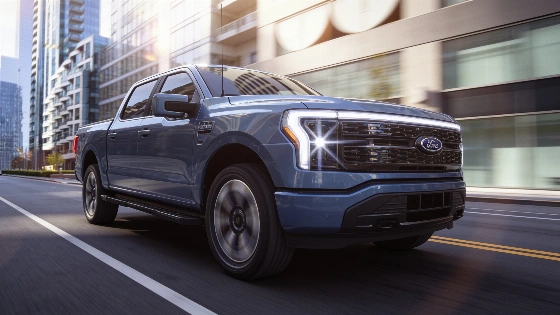
Ford’s F 150 has led US pickup sales for 44 years, packing up to 430 horsepower and towing over 6,100 kilos. Despite its dominance, the truck remains a rare sight in Europe.
On any given day, the Ford F 150 rolls out of American dealerships in numbers that dwarf the competition. The truck’s grip on the US market has lasted four decades, fueled by brute strength and a design that fits the country’s appetite for big, capable vehicles.
Ford’s own specs show the F 150 lineup starts at 325 horsepower and tops out at 430, but those numbers only tell part of the story. The 3.5-liter EcoBoost engine, rated at 382 horsepower, is the one that unlocks the highest towing figure—13,500 pounds, or about 6,123 kilos. The hybrid PowerBoost version pushes output to 430 horsepower, yet its maximum tow rating drops to 11,600 pounds. Ford’s documentation spells out the caveats: cab style, drivetrain, axle ratio, equipment, and payload all shift the numbers. Buyers chasing the top spec won’t get every headline figure in a single truck.
Ford specifically warns that the highest horsepower, torque, payload, and towing ratings are not necessarily available together on a single F 150 vehicle.
Europe, meanwhile, never gets a taste. Ford keeps the F 150 out of its showrooms, steering European buyers toward the Raptor and other models. The reasons are blunt: the truck’s size and thirst for space clash with narrow roads and dense cities. Local regulations and buyer habits push the company to focus elsewhere.
Look closer at the split. In Spain and across much of Europe, drivers have traded in sedans for SUVs, but pickups never caught on. The US doubled down on trucks and 4x4s, filling highways with vehicles that would barely squeeze through a Paris side street. The F 150’s scale and swagger simply don’t translate.
Independent industry sources note that the F 150's sales leadership is typically referenced among full-size pickups, and official Ford reports emphasize that payload and towing figures are manufacturer-claimed maximums, not results of independent testing.
Automotive tastes split further as electric SUVs flood Europe. The BYD Great Tang, for example, has racked up record sales and is now eyeing a European launch, according to recent industry reports. The F 150, by contrast, stays put in the US, its absence in Europe underlining the gulf in what buyers want and what roads can handle.
Ford’s playbook is clear. The company builds for the market in front of it. What sells in Texas or Michigan rarely fits Madrid or Paris. European models get tuned for local rules and infrastructure, while the F 150 remains a US icon—oversized, unapologetic, and built for a different kind of driver.
Industry data shows the F 150’s reign is rooted in the specific demands of American buyers. In Europe, the truck’s absence signals a market that prizes different strengths. The F 150’s story ends at the border, its legend sealed on home turf.